
Tooth wear, also called dental abrasion, is a normal physiological process that develops throughout a person’s life. In some cases, however, it becomes a pathological process that leads to the loss of a large amount of the hard tissues of the tooth. It is treated according to the stage – from fluoride varnishes and gels to composite restorations, ceramic inlays or crowns.
What is tooth wear?
As a physiological process, wear is insignificant, and at a younger age it depends on the type of food eaten and the way of chewing. With harder food and longer, stronger chewing, increased wear is observed, but still within the normal range.
It has been scientifically proven that the upper and lower teeth in the human mouth touch at precisely defined points called articulation contacts. Right after the permanent teeth erupt, these are very small, and over time, as a result of normal wear, they widen.
When does wear become pathological?
In some cases, normal wear of the teeth becomes a pathological process (dental abrasion) that leads to the loss of a large amount of the hard tissues of the tooth. This happens with:
- lower mineralisation of the teeth;
- dental fluorosis;
- bruxism (clenching at night and grinding the teeth);
- nervous tension.
What happens in tooth wear?
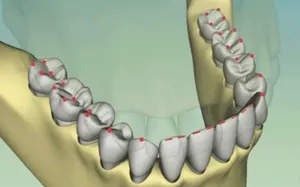
In pathological tooth wear, the contact points very quickly turn from points into whole surfaces, which can be from 5 to 10 mm in diameter. The enamel is affected first, at the contact points located on the slopes and tips of the tooth cusps.
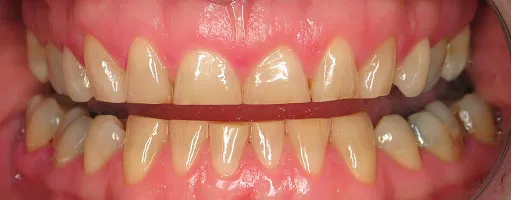
Over time all of the enamel is worn away and the dentine is exposed; it also begins to wear, and faster than enamel because it is less hard. So after a while the cusps of the molars and premolars wear down and become flat.
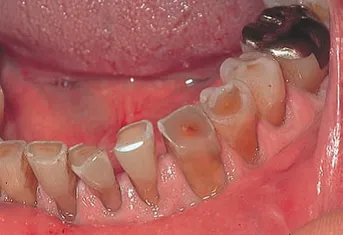
The incisors are also affected – their crowns become shorter, which interferes with biting and looks unattractive.
As a physiological process, wear is slow and without obvious complaints. As a pathological process, however, it develops quickly and passes through several degrees – from wear of individual cusps to completely worn dentine and reaching the nerve of the tooth, and in extremely severe cases to wear of the entire tooth.
What are the consequences and symptoms?
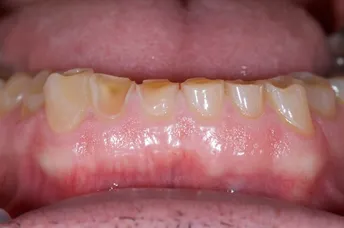
As a result of tooth wear, a person’s facial appearance is also affected – the lower third of the face is lowered. Changes also develop in the jaw joint, characterised by clicking and pain.
Once the enamel has been worn through, sensitivity to thermal (hot, cold) and chemical irritants appears.
A characteristic feature is that caries does not develop on the chewing surfaces of worn teeth. This is due to the continuous deposition of secondary dentine and the disappearance of the places where plaque can build up. Worn tooth crowns often form sharp edges, which can injure the tongue and cheeks during chewing.
What is a wedge-shaped defect and what causes it?
Besides the chewing surfaces, wear of the teeth can also be seen on the side surfaces (the cheek side). This wear is called a wedge-shaped defect and does not occur naturally, but is the result of external causes.
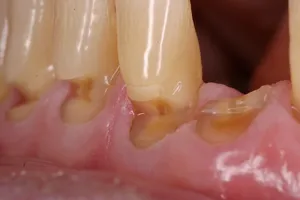
The use of a hard brush, incorrect horizontal movements and abrasive toothpastes (whitening pastes) play a role in the formation of wedge-shaped defects.
A wedge-shaped defect is a groove at the border between the tooth and the gum (the neck of the tooth) with a smooth, polished surface and normal hardness. In an advanced stage it takes on a yellow colour. The incisors, canines and some premolars are most often affected. In most cases, slight pain on touch or sensitivity to heat and cold is observed in the area of the wedge-shaped defect.
How is tooth wear treated?
- Early forms: fluoride varnishes and gels are applied, which reduce sensitivity and strengthen the enamel. The tooth brushing technique is changed – horizontal movements are avoided and the toothbrush is replaced.
- Advanced stages: composite restorations, ceramic inlays or metal-ceramic crowns are made, depending on how far the process has advanced.
Frequently asked questions
Is tooth wear normal?
Yes, as a physiological process it develops throughout life. In some cases, however, it becomes a pathological process that leads to the loss of a large amount of the hard tissues of the tooth.
When does tooth wear become pathological?
With lower mineralisation of the teeth, dental fluorosis, bruxism (clenching at night and grinding the teeth) and nervous tension.
What are the consequences of pathological wear?
The crowns of the incisors become shorter, the lower third of the face is lowered, clicking and pain develop in the jaw joint, sensitivity to hot, cold and chemical irritants appears, and worn teeth may form sharp edges that injure the tongue and cheeks.
What is a wedge-shaped defect?
A groove at the border between the tooth and the gum with a smooth, polished surface and normal hardness. It is caused by external factors – a hard brush, incorrect horizontal movements and abrasive (whitening) toothpastes.
How is tooth wear treated?
In early forms, fluoride varnishes and gels are applied and the tooth brushing technique is changed. In advanced stages, composite restorations, ceramic inlays or metal-ceramic crowns are made.