

The most common diseases of the oral mucosa are candidiasis, leukoplakia and lichen planus. They can appear at any age. According to how they develop, they are independent (primary) or symptomatic (secondary – manifestations in the oral cavity of skin and other diseases).
What causes diseases of the oral mucosa?
The causes of stomatitis are many and varied. According to how they develop, mucosal diseases are either independent (primary) or symptomatic (secondary).
Primary diseases
Primary diseases of the oral mucosa include stomatitis resulting from locally acting factors of infection, such as:
- traumatic (sharp edges of dentures, untreated caries, broken teeth);
- physical (burns from hot food, oral electrogalvanism);
- chemical (acids, formalin, caustic soda);
- infectious (caused by fungi – Candida, Actinomyces species);
- viral (herpes simplex, herpes zoster, aphthous stomatitis).
Secondary (symptomatic) diseases
Secondary diseases include stomatitis accompanying various general diseases:
- skin diseases (lichen planus);
- diseases of the gastrointestinal tract (gastritis, ulcer);
- blood diseases (anaemia, leukaemia);
- vitamin deficiencies (lack of vitamins – A, B, C, PP);
- infectious diseases (flu, infectious mononucleosis).
How do mucosal diseases appear?
Diseases of the oral mucosa become more frequent when the body’s defences are reduced and the virulence of microorganisms in the oral cavity is increased. However varied the causes of stomatitis, the main changes they cause in the oral mucosa are similar, and so they are hard to tell apart.
Stomatitis is characterised by the signs of inflammatory diseases – redness, swelling, raised temperature, pain and impaired function of the organ. In the oral cavity the most common complaints are loss of taste, difficulty chewing, speech disorders and others. The disease may involve a specific area or the whole oral mucosa.
What are the most common diseases and how are they treated?
Oral candidiasis (candidal stomatitis)
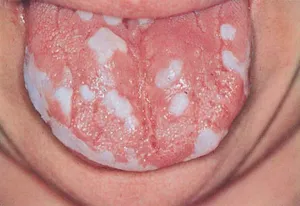
Oral candidiasis is a superficial inflammation of the oral mucosa caused by the fungus Candida albicans. It affects mainly premature and newborn babies, while in adults it can develop after antibiotic treatment, dysbacteriosis, vitamin deficiency and so on.
The mucosa is very red and covered with white creamy coatings (plaques). There are complaints of burning, itching and severe pain, and eating is impaired. Candidiasis can be either acute or chronic.
It is treated by maintaining an alkaline environment in the mouth. Mouth rinses with alkaline solutions, mild antiseptics and dyes are applied. Nystatin tablets may also be prescribed as treatment.
Lichen ruber planus (lichen planus)
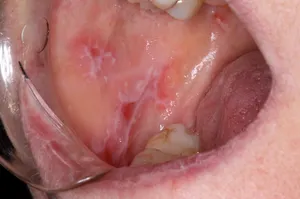
Lichen ruber planus is a skin disease that causes characteristic changes in the oral cavity. They are characterised by hyperkeratosis (thickening) of the affected areas of the oral mucosa and skin. Bacterial, viral, traumatic, neurogenic and other factors play a part in this disease.
The characteristic changes are pearly white in colour and sit on healthy-looking mucosa, without signs of inflammation. They are most often found on the mucosa of the cheeks around the last molars. The pearly white plaques develop almost without complaints. Rarely, there may be a slight stinging.
Leukoplakia
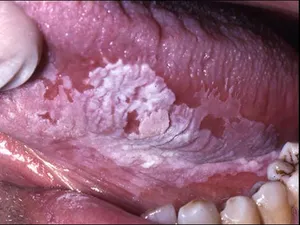
Leukoplakia is a chronic disease of the oral mucosa that causes changes in the epithelium. Harmful habits such as smoking, regular alcohol intake, spicy and irritating food, poor hygiene, sharp edges of broken teeth, ill-fitting dentures, occupational factors (paints, varnishes and petrol fumes), vitamin deficiency and others are very important for its appearance.
Leukoplakia mainly affects the upper surface and side edges of the tongue, the mucosa of the cheeks, the lower lip and the corners of the mouth. It starts as small white spots that merge with one another and form a thin, flat, whitish plaque. It is greyish-white, with uneven borders, and rises above the rest of the unchanged mucosa.
There may be a feeling of tightness or pulling, up to mild pain in the area, as well as an altered sense of taste. Sores and erosions appear in the plaque, and the general complaints also increase.
Leukoplakia is one of the precancerous conditions of the mouth, and so its timely diagnosis and treatment are vital. Treatment includes removing the irritating factors and giving up harmful habits such as smoking and alcohol. Alkaline and mild solutions are used for rinsing and cleaning the oral cavity.
Why is a check-up with the dentist important?
The oral mucosa is very sensitive, and it is often on the mucosa that the symptoms of inflammatory diseases first appear, which helps in the timely diagnosis of diseases of other organs of the human body. With a thorough examination by the dentist, many diseases can be found at an early stage.
Frequently asked questions
What are the most common diseases of the oral mucosa?
Candidiasis, leukoplakia and lichen planus. They can appear at any age.
How do primary mucosal diseases differ from secondary ones?
Primary ones are independent and are due to local factors – traumatic, physical, chemical, infectious and viral. Secondary (symptomatic) ones are manifestations in the oral cavity of skin and other general diseases.
How is oral candidiasis treated?
By maintaining an alkaline environment in the mouth – rinses with alkaline solutions, mild antiseptics and dyes. Nystatin tablets may also be prescribed.
What causes leukoplakia and why is timely diagnosis important?
Harmful habits such as smoking and alcohol, irritating food, poor hygiene, sharp edges of broken teeth, ill-fitting dentures and vitamin deficiency are very important. Leukoplakia is one of the precancerous conditions of the mouth.
Why can a thorough examination find a mucosal disease?
The oral mucosa is very sensitive, and the symptoms of inflammatory diseases often appear on it first, which helps in the early diagnosis of diseases of other organs as well.