
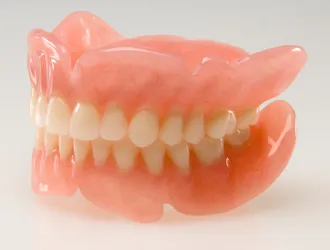
Dentures are a universal way to treat partial or complete tooth loss. They restore chewing and the look of the smile and can be made from pink acrylic, metal or soft plastic.
Why is it important to replace missing teeth?
When several or all teeth are lost, changes occur in the oral cavity – read more.
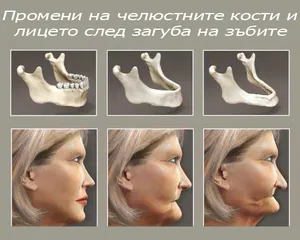
They impair chewing and speech and also change the look of the face: the lips and cheeks sink in and the chin juts forward. This spoils aesthetics and causes psychological distress – patients cover their mouth with a hand when talking.
What are dentures?
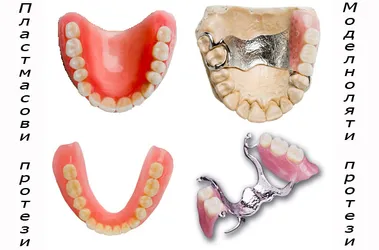
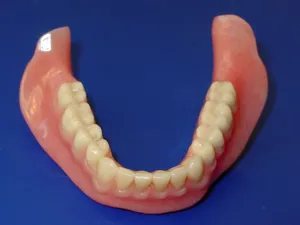
Dentures can be complete (when all teeth are missing) or partial (from one missing tooth to only one remaining tooth). Every denture consists of a denture base and artificial teeth, and partial dentures also have retention and stabilisation elements (various kinds of clasps, joints, bars, etc.). The materials are special pink acrylic or metal, or a combination of the two.
What are the advantages of dentures?
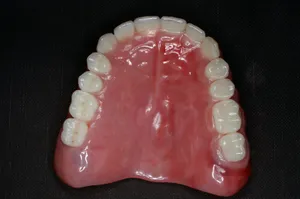
- they can be made for a large number of different tooth defects (combinations of extracted and remaining teeth) – from the loss of a single tooth to only one remaining tooth;
- a noticeably lower price;
- easier fabrication (for acrylic dentures);
- the possibility of adjustment and repair – if broken, or if the denture is uncomfortable.
What are the disadvantages of dentures?
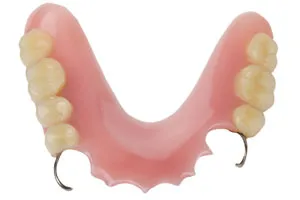
- mobility – eating with a denture is never as secure and comfortable as eating with dental bridges;
- they are bulkier and require a longer period of adaptation by the patient;
- acrylic dentures can break while eating and injure the mucosa;
- the acrylic ages over the years, which changes its colour (yellowing) and reduces its strength – this requires the dentures to be replaced every 5–6 years.
Cast partial dentures do not have some of these disadvantages, but they require great precision in fabrication and are more expensive. Replacement every 5–6 years applies to all types of dentures.
What preparation is needed before making a denture?
Before dentures are made, preparation and planning take place:
- broken-down roots are extracted;
- broken fillings are replaced;
- crowns are made for the teeth that need them;
- sharp edges in the bone are corrected (they would cause sores if the denture were made without smoothing them).
The preparation is mandatory and no less important than the fabrication of the denture itself.
What types of denture are there?
Depending on the material used, dentures are of three main types:
- Pink acrylic denture – the most commonly made complete or partial dentures.
- Cast partial denture – partial dentures made of metal and acrylic.
- Soft plastic denture – a new method.
How much do they cost?
- Pink acrylic denture: 350 €
- Soft (flexible) plastic denture: 460 €
- Cast partial denture: 720 €
All prices are in the price list.
Frequently asked questions
What types of denture are there?
Complete (when all teeth are missing) and partial (from one missing tooth to only one remaining tooth). By material there are three main types: pink acrylic, cast and soft plastic.
What are dentures made of?
Every denture consists of a denture base and artificial teeth, and partial dentures also have retention and stabilisation elements (various kinds of clasps, joints, bars, etc.). The materials are special pink acrylic or metal, or a combination of the two.
How often do dentures need to be replaced?
Every 5–6 years – this applies to all types of dentures. The acrylic ages – it changes colour (yellowing) and loses strength.
Is preparation needed before a denture is made?
Yes, preparation and planning are mandatory. Broken-down roots are extracted, broken fillings are replaced, crowns are made for the teeth that need them, and sharp edges in the bone are corrected.
What are the disadvantages of dentures?
Mobility – eating with a denture is never as secure and comfortable as eating with a dental bridge. Dentures are bulkier and require a longer period of adaptation, and acrylic ones can break while eating and injure the mucosa.