
Treatment of periodontitis aims to stop the progression of the disease. In most cases it is considered successful if the gum inflammation is brought under control and further bone loss is stopped. It is chosen individually for each patient.
What does treatment depend on?
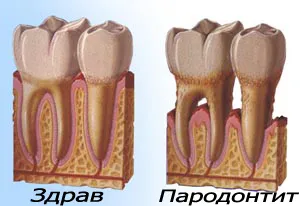
Treatment is chosen individually for each patient and depends on the form and stage of the disease, the patient’s age, general condition and any accompanying diseases.
There are modern methods such as bone grafting and guided bone regeneration that are used in the treatment of periodontitis, but so far it is not possible to fully restore the height of the lost alveolar bone.
What does the patient need to know?
Before starting treatment it is important for the patient to understand and accept that the treatment process is long and that the following are necessary:
What do general and local treatment involve?
Treatment of periodontal diseases can be general or local.
General treatment aims to raise the body’s defences and consists of taking vitamins (A, B complex, B1), minerals, general tonic medicines, biogenic stimulants, a suitable diet and a full lifestyle.
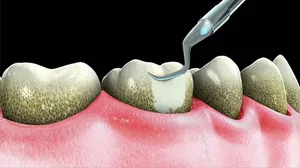
Local treatment aims to remove the causes of periodontitis and restore the damaged tissues. It is carried out in two stages:
- First stage — tartar and plaque are cleaned off, and incorrectly made fillings and crowns are replaced.
- Second stage — at the dentist’s discretion and depending on the severity and stage of the disease, one of the following methods is applied: curettage, bone grafting, splinting of the teeth.
What methods are used in the second stage?
- Cleaning of dental plaque and tartar, and polishing. Dental plaque is a sticky bacterial biofilm. Read more.
- Curettage. Periodontal curettage is a method that is used at all stages of periodontitis. Read more.
- Bone grafting. It is used in more severe gingival recessions and in periodontitis. Read more.
- Splinting of loose teeth. Splinting means “tying” loose teeth together. Read more.
How much does it cost?
- Scaling and polishing – full mouth: 80 – 100 €
- Bone grafting: 600 – 800 €
- Splinting with glass fibre and composite: 60 – 80 € per tooth
All prices are in the price list.
Frequently asked questions
When is periodontitis treatment considered successful?
In most cases treatment is considered successful if the gum inflammation is brought under control and further bone loss is stopped.
Can the lost bone be restored?
There are modern methods such as bone grafting and guided bone regeneration, but so far it is not possible to fully restore the height of the lost alveolar bone.
What does periodontitis treatment depend on?
Treatment is individual for each patient and depends on the form and stage of the disease, the patient’s age, general condition and any accompanying diseases.
What are the stages of local treatment?
In the first stage tartar and plaque are cleaned off and incorrectly made fillings and crowns are replaced. In the second stage, at the dentist’s discretion, curettage, bone grafting or splinting of the teeth is applied.
What is expected of the patient during treatment?
The treatment process is long and requires perfect oral hygiene and regular follow-up check-ups.