

Splinting of loose teeth means “tying” them to neighbouring healthy teeth. It is applied to a group of teeth or a whole dental arch and can be done with fixed or removable splints.
What is splinting and when is it used?
Splinting is applied to a group of teeth or to a whole dental arch (upper or lower). Depending on how it is attached (bonded) to the teeth, there are two main kinds of splint – movable (removable) or immovable (fixed).
Splints are used:
- in inflammatory periodontal diseases with grade II tooth mobility (read more);
- for loose or knocked-out teeth after injuries.
They can be made of metal, plastic or glass-fibre.
What are fixed splints?
Fixed splints are used when teeth become loose because of periodontitis. Before splinting, perfect cleaning of tartar and plaque is essential; otherwise the strength of the splint will be reduced.
Splinting with glass-fibre and composite
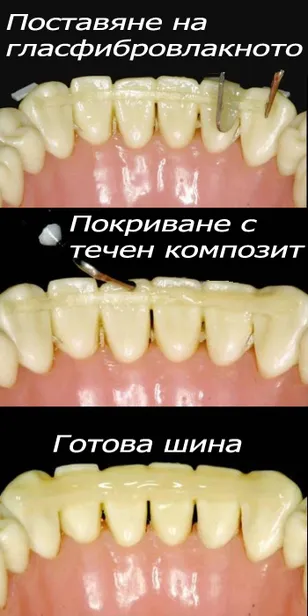
A new and very successful method is splinting with glass-fibre and composite. It stabilises loose teeth well and is at the same time the most aesthetic, because the splint is very thin, sits on the tongue side and is the same colour as the patient’s teeth. This type of splint is made at the dental clinic:
- A rubber dam (a special sheet that isolates the teeth from saliva in the mouth) is placed and the required length of glass-fibre is prepared.
- The tongue-side surfaces of the teeth are treated with an etching liquid, rinsed, dried and the appropriate bonding agent (the adhesive for the glass-fibre) is applied.
- The fibre is placed with suitable instruments and covered with liquid photopolymer, which is hardened with a curing lamp and fixes the glass-fibre to the teeth.
- Once the splint is ready, it is adjusted and polished.
Patients get used to this type of splint very quickly and forget it is there.
Metal-ceramic bridges and block crowns
Another commonly used type of fixed splint is metal-ceramic bridges (read more) or block crowns. They are used in severe periodontitis, when teeth have also been lost. These splints redistribute the chewing forces correctly and have a long-lasting effect. They are a good choice for missing teeth and for teeth that are badly damaged.
This type of splint solves three problems at once – it eliminates tooth mobility, replaces missing teeth and restores the beauty of the natural smile. Their only disadvantage is that the teeth have to be prepared (ground down).
What are removable splints?
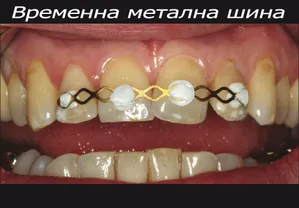
Removable splints are used after injuries or when teeth are knocked out. They are used to fix the teeth temporarily and are removed after healing. They can be made of plastic – they are easy to make after an impression has been taken, but they are bulky and unhygienic.
When a tooth is knocked out or a jaw is broken, metal splints are made from ligature wire. They most often cover both jaws, are not aesthetic and make good hygiene hard to maintain. They are removed after the fracture has healed.
How much does it cost?
Splinting with glass-fibre and composite costs 60 – 80 € per tooth. All prices are in the price list.
Frequently asked questions
What is splinting of loose teeth?
Splinting means “tying” loose teeth to neighbouring healthy teeth. It is applied to a group of teeth or to a whole dental arch.
What kinds of splint are there?
Two main kinds – movable (removable) and immovable (fixed), depending on how they are attached to the teeth. They can be made of metal, plastic or glass-fibre.
When are splints used?
In inflammatory periodontal diseases with grade II tooth mobility and for loose or knocked-out teeth after injuries.
Why must tartar be cleaned off before splinting?
Before splinting, perfect cleaning of tartar and plaque is essential; otherwise the strength of the splint will be reduced.
What is the drawback of metal-ceramic bridges as splints?
Their only disadvantage is that the teeth have to be prepared (ground down).