

CEREC is a system for 3D design and manufacture of crowns, veneers, ceramic fillings (inlays), onlays, overlays and bridges of pure ceramic in a single visit. At Ralev Dental Clinic the procedure takes from 2 to 4 hours in the clinic — with no temporary crowns and no waiting 5 to 7 days for a dental laboratory.
Video: how we make and finish a ceramic crown with CEREC within 4 hours.
What is CEREC?
CEREC is a world-leading system that combines a digital impression, computer design and milling of the restoration from a ceramic block — all on site in the clinic.
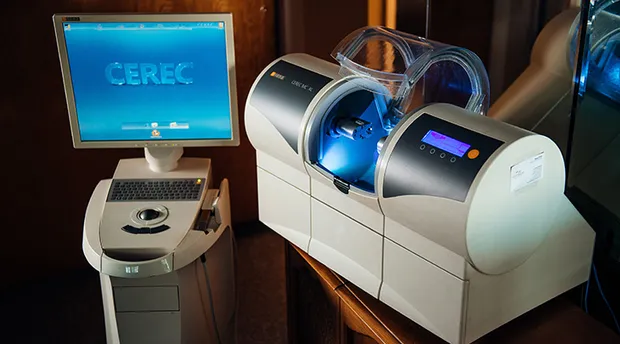
The system consists of 4 main parts:
- 3D scanner – a special intraoral camera that takes a digital impression of the teeth.
- Computer with specialised software – used for the 3D design of the future crown or veneer.
- Milling unit – a robot that mills the crown or veneer from a block of pure ceramic (IPS Emax).
- Ceramic furnace – where the finished restoration is stained and glazed.
What are the advantages of CEREC?
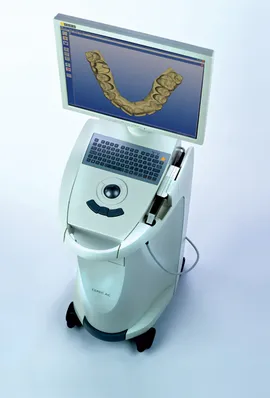
- One visit. Crowns, veneers, inlays, onlays, overlays and bridges are made in one visit lasting 2 to 4 hours.
- No temporary crowns. No debonding, breakage, pain or sensitivity of the prepared teeth that come with temporary crowns.
- Highly aesthetic materials. Lithium disilicate ceramic (IPS Emax), leucite ceramic and feldspathic porcelain.
- Ceramic fillings (inlays). Caries can be treated with a ceramic inlay, which is many times stronger and more aesthetic than a composite filling.
- Precision. Extremely accurate fabrication of the restorations.
- Adjustments on site. The dentist can adjust and individually stain the restoration directly in the clinic.
How does the procedure work?
Step 1: Clinical examination
The condition of the teeth that need restoration is assessed. X-rays are reviewed and any previous root canal treatment is evaluated. The condition of the crown of the tooth is also checked – secondary caries, fractures, need for a build-up. Any problems are treated first and an appointment is made for the crown, veneer or inlay.
Step 2: Preparing the tooth
The dentist decides how much of the tooth needs to be prepared according to the chosen restoration – crown, veneer, inlay, bridge, etc.
Step 3: Digital impression
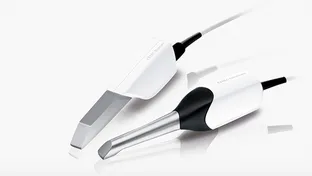
The impression is taken with the 3D camera. The prepared teeth are dusted with a special contrast powder and scanned, together with the opposing teeth and the bite. This recreates the situation in the mouth as a virtual 3D model. After the scan you can wait in the waiting room while the next stages are done.
Step 4: 3D design of the restoration
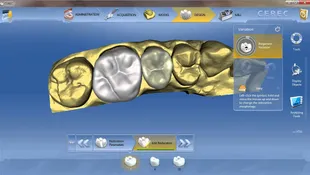
The scanned upper and lower dental arches and the bite are combined into a 3D model – a computer image of the mouth. The future restoration (crown, veneer or inlay) is designed on it with the special software.
Step 5: Milling from ceramic
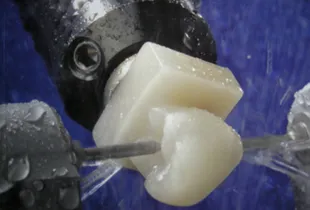
The material is chosen: feldspathic ceramic, leucite ceramic (Empress) or the strongest pure ceramic – lithium disilicate (IPS Emax). The ceramic comes as ready-made blocks. The chosen block is placed in the milling unit, which mills the crown or veneer in about 20 minutes.
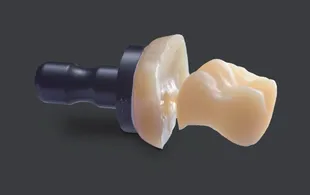
Step 6: Try-in
The finished restoration is tried in the mouth. The contacts are checked and fine adjustments are made if needed. The exact shade is determined.
Step 7: Crystallisation, staining and glazing
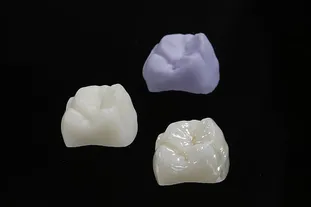
The restoration is processed in a special high-temperature ceramic furnace. The ceramic is crystallised at temperatures above 800 degrees to reach its maximum strength. Then the individual stains and the glaze are applied – in about 15 minutes.
Step 8: Bonding
The finished crown, veneer or inlay is bonded adhesively to the tooth with special high-strength cements that give an extremely strong and reliable bond with the tooth tissue.
How long does it take and how much does it cost?
Making a pure ceramic restoration with CEREC takes from 2 to 4 hours in the clinic, instead of two visits and 5 to 7 days of waiting for a dental laboratory. A CEREC ceramic crown costs 400 €. All prices are in the price list.
Frequently asked questions
How many visits does a CEREC crown take?
One. The whole procedure — from preparing the tooth to bonding the finished crown — takes from 2 to 4 hours in the clinic.
Do I need a temporary crown?
No. The restoration is made and bonded on the same day, so no temporary crowns are made and you avoid the debonding, breakage and sensitivity that come with them.
What are CEREC restorations made of?
Pure ceramic in the form of ready-made blocks: feldspathic porcelain, leucite ceramic (Empress) and the strongest – lithium disilicate (IPS Emax).
What can be made with CEREC?
Crowns, veneers, ceramic fillings (inlays), onlays, overlays and bridges of pure ceramic.