

Pulpitis, periodontitis and radicular cysts are most often treated with endodontic (root canal) treatment, which cleans the root canals of the inflamed nerve and seals them. The aim is to stop the pain and save the tooth.
How does it come to pulpitis, periodontitis and a cyst?
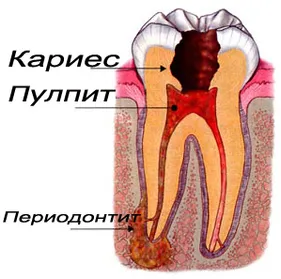
The most common tooth diseases develop in a certain sequence: caries → pulpitis → periodontitis (granuloma) → radicular cyst. Each of them develops from the untreated disease that precedes it: pulpitis develops from untreated caries, periodontitis from untreated pulpitis, and a radicular cyst from untreated periodontitis.
In caries only the hard tissues of the crown of the tooth are damaged, and treatment is by placing fillings (read more).
In pulpitis, periodontitis and radicular cysts, the damage is caused by bacteria that have reached the nerve of the tooth and spread into the space around the tooth root and the bone that holds the tooth.
What is the treatment and what is its aim?
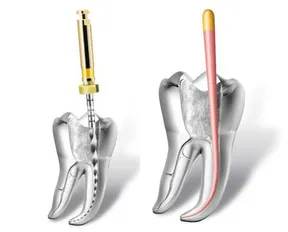
The treatment of pulpitis and periodontitis aims to stop the pain, remove the inflamed or necrotic pulp left in the root canals, and prevent complications in the periodontium and the development of granulomas and cysts.
The main method of treatment is endodontic (root canal) treatment. It cleans the root canals of the inflamed or necrotic nerve and fills them with special pastes and points (gutta-percha) that seal the inside of the tooth and so stop bacteria from reaching the bone.
How is pulpitis treated?
In pulpitis the infection is confined to the root canals of the tooth and has not spread to the bone, so complete cure requires only removal of the inflamed nerve and filling of the root canals – endodontic treatment (read more).
How are periodontitis and cysts treated?
In periodontitis and cysts endodontic treatment is one stage of the overall treatment. Besides the inflammation in the root canals, the inflammation that has affected the bone must also be treated:
Can the tooth be saved?
With good general health, a correct diagnosis and quality treatment, pulpitis and periodontitis are cured and the tooth is saved. In some cases of severe inflammation, the offending tooth has to be extracted (read more).
Where is the treatment described in detail?
- Root canal treatment of pulpitis – the treatment of pulpitis is called endodontic treatment (root canal treatment).
- Treatment of periodontitis – the treatment of periodontitis is a difficult and responsible task.
- Apical osteotomy and hemisection – apical osteotomy is a surgical procedure.
How much does it cost?
Removal of the nerve costs 60 – 80 € per canal. All prices are in the price list.
Frequently asked questions
What diseases does untreated caries lead to?
The most common tooth diseases develop in a sequence: caries, pulpitis, periodontitis (granuloma), radicular cyst. Each develops from the untreated disease that precedes it.
How are pulpitis and periodontitis treated?
The main method is endodontic (root canal) treatment – cleaning the root canals of the inflamed or necrotic nerve and filling them with special pastes and points.
What is the aim of treatment?
To stop the pain, remove the inflamed or necrotic pulp from the root canals, and prevent complications in the periodontium and the development of granulomas and cysts.
Is root canal treatment enough for periodontitis?
Not always. In periodontitis and cysts endodontic treatment is one stage of the overall treatment – the inflammation that has affected the bone must also be treated, with medications and in some cases surgical intervention.
Can the tooth be saved?
With good general health, a correct diagnosis and quality treatment, pulpitis and periodontitis are cured and the tooth is saved. In some cases of severe inflammation, the offending tooth has to be extracted.