

The treatment of pulpitis is called endodontic (root canal) treatment. The nerve is numbed and removed, the root canals are shaped and filled with a special paste and gutta-percha points, and finally a filling is placed. The duration depends on the number of canals and how advanced the disease is.
What are the stages of root canal treatment?
The treatment goes through several stages of varying duration, depending on how many canals the affected tooth has and how advanced the disease is:
- Devitalising the nerve or numbing with anaesthetic.
- Opening up to the nerve.
- Removing the nerve.
- Shaping the root canals.
- Filling the shaped canals.
- Placing a filling.
How is the tooth numbed?
At the dentist’s discretion, either a medication is placed that over a few days kills the nerve and makes it insensitive, or an anaesthetic is given to numb the tooth.
This is necessary because in pulpitis the nerve is alive and very painful to touch, with severe pain even from breathing in cold air, which makes its mechanical removal impossible.
How is the nerve opened up and removed?
Only after the nerve has been numbed does the dentist open it up, in order to find the pulp chamber and see the root canals. This is done by going through the crown of the tooth.
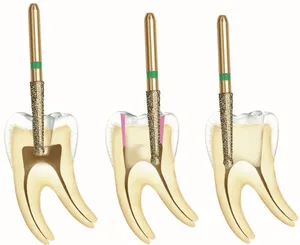
A diagram of opening the pulp chamber (above) and an opened pulp chamber (below).
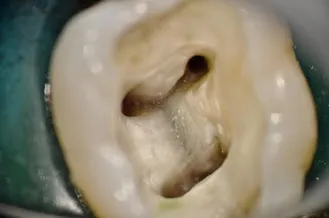
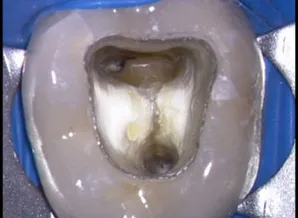
Once exposed, the nerve is removed from both the pulp chamber and the root canals.
How are the root canals shaped?
After the nerve is removed, the root canal is cleaned, widened and shaped in a precisely defined way that allows it to be filled correctly. The greatest difficulty in endodontic treatment is working on curved or narrowed root canals, and this can be the reason for the failure of this type of treatment and for the need to extract the tooth (read more).
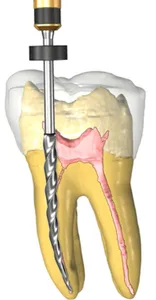
The photo shows cleaning and shaping of the root canal with special files.
In some cases, at the dentist’s discretion, a special medication can be placed in the root canals to help eliminate the bacteria that caused the pulpitis.
How are the root canals filled?
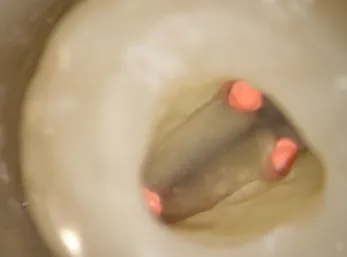
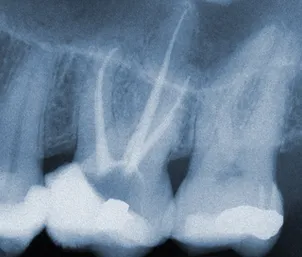
Once the root canal has been shaped appropriately and the infection is under control, it is filled with a special paste with healing properties and gutta-percha points. The purpose is to seal the inside of the tooth hermetically and prevent bacteria from settling in it.
Once the root canal is correctly filled, a filling is placed (read more). Very often an intraradicular post (read more) also has to be placed to strengthen the crown of the tooth.
What is important after root canal treatment?
Teeth with the nerve removed change colour and become more brittle. As a result of endodontic treatment, a large part of the walls of the tooth is removed, which makes it extremely fragile. That is why metal-ceramic crowns are recommended on endodontically treated teeth (read more).
How much does it cost?
- Root canal treatment (removal of the nerve and filling): 120 – 160 € per canal
- Removal of the nerve: 60 – 80 € per canal
- Canal filling: 40 – 60 € per canal
All prices are in the price list.
Frequently asked questions
What is root canal (endodontic) treatment?
This is what the treatment of pulpitis is called. It goes through several stages of varying duration, depending on how many canals the affected tooth has and how advanced the disease is.
Why is the nerve numbed before it is removed?
In pulpitis the nerve is alive and very painful to touch, with severe pain even from breathing in cold air, which makes its mechanical removal impossible. So either a medication that kills the nerve over a few days is placed, or an anaesthetic is given.
What are the root canals filled with?
With a special paste with healing properties and gutta-percha points. The purpose is to seal the inside of the tooth hermetically and prevent bacteria from settling in it.
What is the most difficult part of root canal treatment?
Working on curved or narrowed root canals. This can be the reason for failure and for the need to extract the tooth.
What is recommended after root canal treatment?
Teeth with the nerve removed change colour and become more brittle, and a large part of the walls of the tooth is removed. That is why metal-ceramic crowns are recommended.