
Fluoride prevention protects teeth from caries by delivering fluoride through the body (endogenous) or directly onto the enamel (exogenous). It is not mandatory — the decision is the child’s parents’, and the dentist can recommend and draw up a programme. We see children from the age of 5.
What types of fluoride prevention are there?
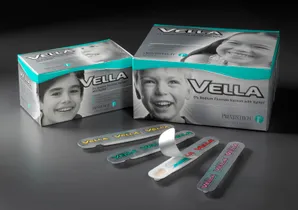
Fluoride prevention comes in two main types — endogenous and exogenous.
- Endogenous: fluoride enters the body through the digestive system and is then carried by the blood to the bones and teeth.
- Exogenous: fluoride is delivered directly onto the tooth surface through various carriers (gels, varnishes, foams, toothpastes, etc.).
In all the sources used for fluoride prevention, the fluoride is not in a free state but is bound in chemical compounds such as NaF (sodium fluoride), which give it stability.
Is fluoride prevention safe?
Nowadays there are two main opinions about fluoride prevention.
- Positive — because of the extremely high degree of protection against caries in children who receive fluoride prevention.
- Negative — because of the ability of fluoride, when overdosed, to cause fluorosis, which is characterised by white to brown spots on the teeth.
The division of society into supporters and opponents of fluoride prevention has contributed greatly to its development and refinement. This has led to an optimal level — the highest degree of protection against caries with a negligible risk of dental fluorosis, and then only if the instructions and the way the prevention is carried out are not followed or are neglected.
Another important feature, which the opponents of fluoride prevention do not emphasise: dental fluorosis cannot develop with exogenous fluoride prevention. This is due to its nature.
What is exogenous fluoride prevention?
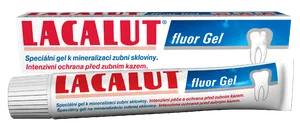
Exogenous fluoride prevention is a method suitable for any age, in which fluoride is delivered directly onto the enamel surface. The forms of application are of two kinds:
- for home use — fluoride-containing chewing gums, toothpastes, mouthwashes, etc.;
- for use in the dental clinic — fluoride varnishes, gels, foams, etc.
The forms for home use are used over a long period of time and therefore have a very low fluoride content and a small effect.
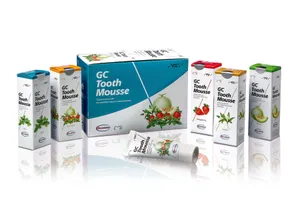
The forms for use in the dental clinic are applied by the dentist once for a certain period of time, contain a higher concentration of fluoride and give a better effect.
An important condition for exogenous fluoride prevention is that the toothpaste or solutions are not swallowed. That is why, for younger children, it is recommended that a parent supervises the brushing of teeth.
What is endogenous fluoride prevention?
It is carried out in the period from birth to about 2 years after the permanent teeth erupt. Until then, the processes of formation and development of the roots of the teeth are most active. Fluoride is delivered to the teeth by being taken up by the body and reaching them through the blood and saliva.
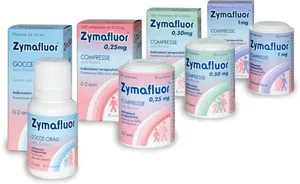
There are several forms of endogenous fluoride prevention: fluoride tablets, fluoride drops, mineral water, fluoridated milk and fluoridated salt. To make the prevention as beneficial as possible and at the same time safe, the total intake of fluoride from these five main sources must be taken into account. This is of the utmost importance for correctly dosing the child’s fluoride intake.
How much fluoride does a child need?
The norms for the fluoride needed for the correct formation of bones and teeth, which do not cause fluorosis and have no harmful effect, are known. They depend on the child’s age and are as follows:
- up to 3 years of age — 0.5–0.8 mg;
- from 3 to 6 years of age — 0.8–1.0 mg;
- from 6 to 10 years of age — 1.0–1.3 mg;
- over 10 years of age — 1.3–1.5 mg.
These amounts of fluoride must be supplied to the body, first taking into account the natural intake from water. For example, children living in areas with fluoride-poor water will have an insufficient fluoride intake, unlike children living in Hisarya, who drink water with a high concentration of fluoride.
Thus, if fluoride tablets or drops with the same fluoride content are prescribed to children of the same age, one of whom has lived in an area with a high fluoride content in the water and the other in an area with a low content, the effect will be different. The child from the high-content area will develop fluorosis, while in the child from the fluoride-poor region the teeth will be healthy and maximally protected from caries. This is only one of the factors that must be taken into account when drawing up a fluoride prevention programme for a child.
What role does mineral water play?

Another key factor is the regular intake of bottled mineral water. Different brands have different fluoride content, which is stated on the label. Some of them are highly mineralised and their regular use must be taken into account when drawing up the programme, so that fluoride is not overdosed. For example:
- Merichleri — 5.7 mg/l;
- Hisarya — 4.7 mg/l;
- Devin — 4.0 mg/l.
How is the programme drawn up?
All sources of fluoride must be included in the programme for endogenous fluoride prevention, with the amounts of fluoride in them correctly interpreted. It is drawn up by the dentist on the basis of data about the child’s place and way of life and is strictly individual. With strict and responsible observance of the programme there is no risk of developing fluorosis and the child’s teeth are optimally protected from caries.
Is fluoride prevention mandatory?
No. Fluoride prevention is not mandatory and the choice of whether to carry it out is a decision for the child’s parents. The dentist can recommend and draw up a programme for carrying it out, but its correct application and the final result depend solely on the parents.
Frequently asked questions
What is the difference between endogenous and exogenous fluoride prevention?
In endogenous prevention, fluoride enters the body through the digestive system and is carried by the blood to the bones and teeth. In exogenous prevention, fluoride is delivered directly onto the tooth surface through gels, varnishes, foams, toothpastes, etc.
Can exogenous fluoride prevention cause fluorosis?
No. Dental fluorosis cannot develop with exogenous fluoride prevention. An important condition is that the toothpaste or solutions are not swallowed, which is why, for younger children, it is recommended that a parent supervises the brushing of teeth.
Is fluoride prevention mandatory?
No. The choice of whether to carry it out is a decision for the child’s parents. The dentist can recommend and draw up a programme for carrying it out.
Until when is endogenous fluoride prevention carried out?
In the period from birth to about 2 years after the permanent teeth erupt.
How is the programme for endogenous fluoride prevention drawn up?
It is drawn up by the dentist on the basis of data about the child’s place and way of life and is strictly individual. It includes all sources of fluoride, including water and bottled mineral water.