

Tooth discolouration has various causes – from coffee and smoking to fluorosis, medication and a dead nerve. The natural colour of the teeth is determined by the structure of the enamel and dentine and the content of organic and inorganic components in them. Discolouration caused by surface deposits is easily removed by whitening, while colourings that have penetrated deeper are treated by restoring the teeth with veneers or crowns.
What is the natural colour of teeth?
Tooth enamel, as a layer, is transparent – it shows through to a large extent. The dentine beneath it has an opaque colour, and it is what gives the teeth their true colour.
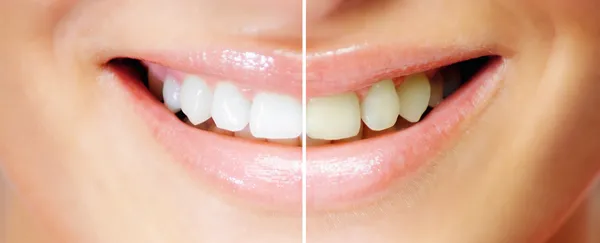
The natural colour of the teeth is genetically determined and varies from person to person, from white to grey to light yellowish.
What causes tooth discolouration?
Foods, drinks and smoking
Every day we consume foods and drinks containing various colourings (natural or artificial), preservatives and raising agents. Regular use of coffee, cola, tea and red wine darkens the teeth.
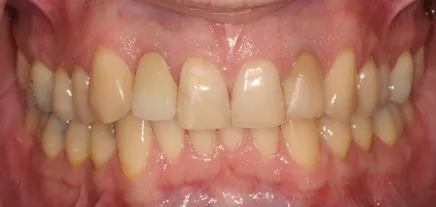
Smoking is the other main factor in tooth discolouration, especially when combined with coffee. In different people teeth discolour over different periods of time, depending on the strength and resistance of the enamel. Yellowed teeth spoil the aesthetic appearance of the smile and lower self-confidence.
Fluorosis
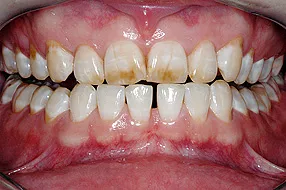
When larger amounts of fluorine accumulate in the tooth enamel (with a high F content in water or milk, or incorrect dosage during childhood), fluorosis develops. It is characterised by yellowish spots unevenly distributed over the enamel.
Medication and occupational factors
Discolouration can also result from prolonged use of various medications in childhood (tetracycline antibiotics), which lead to yellow to brown spots on the teeth.
A change in tooth colour can also be seen in people involved in the production of paints, varnishes, petrol and the like.
A dead nerve and root canal treatment
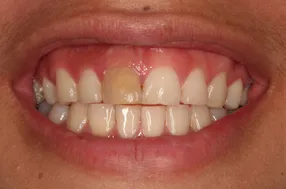
With necrosis of the pulp of the tooth (gangrene) the crown darkens and takes on a greyish colour. This is due to the breakdown of the nerve tissue and is a diagnostic sign that the tooth has died.
After endodontic treatment (root canal filling), some of the root canal filling pastes can penetrate into the tooth tissue and discolour the tooth to pink or brownish shades, depending on the composition of the paste.
How is discolouration treated?
Despite strict oral hygiene, some discolouration remains, and even professional cleaning and polishing does not give a satisfactory result, because the colourings have penetrated deep into the enamel.
- Discolouration resulting from deposits of food, drinks, smoking and poor hygiene is easily removed by whitening using the external bleaching method.
- For teeth that have had endodontic treatment, internal bleaching is used.
- If internal bleaching does not give the required result, the teeth are restored with veneers or crowns.
Frequently asked questions
What is the natural colour of teeth?
It is genetically determined and varies from person to person, from white to grey to light yellowish. It is determined by the structure of the enamel and dentine.
Which foods and drinks discolour teeth?
Regular use of coffee, cola, tea and red wine darkens the teeth. Smoking is the other main factor, especially when combined with coffee.
Why does a tooth darken and turn greyish?
With necrosis of the pulp (gangrene) the crown darkens and takes on a greyish colour, because the nerve tissue breaks down. It is a sign that the tooth has died.
How is discolouration removed?
Discolouration from deposits is easily removed by external bleaching. For teeth that have had endodontic treatment, internal bleaching is used, and if it does not give the required result, the teeth are restored with veneers or crowns.