

An impacted tooth is a tooth that has remained in the bone and is often positioned incorrectly (horizontally). The teeth most often impacted are the lower wisdom teeth, canines and premolars. In most cases it causes no complaints, but wisdom teeth often cause complications such as pericoronitis, which are treated with a microsurgical operation or with surgical extraction of the tooth.
What is an impacted tooth?
All teeth can become impacted, but this applies most of all to the lower wisdom teeth, canines and premolars. When a tooth is delayed in erupting by more than 6 months beyond the normal time frames, an X-ray should be taken to establish whether there is a tooth germ and what position it is in.
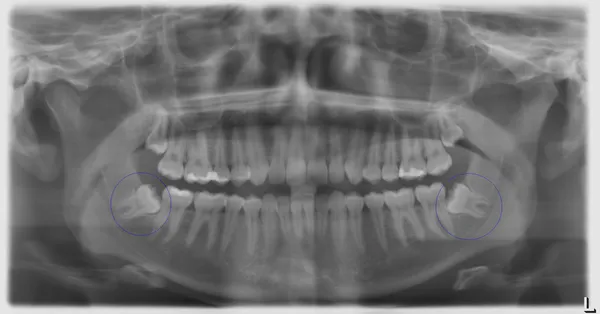
X-ray of a patient with impacted wisdom teeth.
What causes tooth impaction?
The causes can be taken to be:
- delayed resorption of the roots of the baby teeth;
- pathological processes around the teeth and bone;
- general diseases (rickets, endocrine disorders, vitamin deficiencies, etc.).
Lower wisdom teeth are most often impacted because there is no room in the jaw for them to grow. Impacted teeth in most cases do not cause complaints – they can stay in the bone and be discovered on an X-ray taken for another reason.
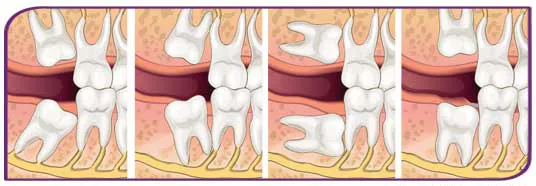
Wisdom teeth can be positioned differently in the bone:
What are the symptoms?
In other cases there can be pain, a feeling of heaviness in the area of the tooth, difficulty opening the mouth and impaired chewing. Complications most often occur with wisdom teeth.
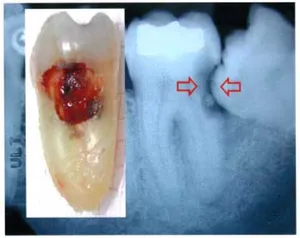
When a wisdom tooth lies incorrectly (horizontally) in the bone, it can press on the roots of the neighbouring teeth, which leads to periodic or constant discomfort or even pain in the area. An impacted tooth can cause caries in the neighbouring tooth or push healthy teeth out of their normal position. This is seen most often with the lower front teeth, which become crowded on top of one another.
Partially impacted wisdom teeth and pericoronitis
In some cases the lower wisdom teeth can be partially impacted.
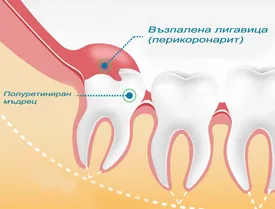
These are wisdom teeth in which only part of the crown has appeared above the gum, but the remainder cannot grow. Very often the gum around them becomes inflamed – the so-called pericoronitis. In pericoronitis the lymph nodes enlarge, there is pain on swallowing and redness of the gum over the tooth.
How is it treated?
- Pericoronitis is treated by a microsurgical operation called operculectomy.
- When the complaints from the impacted wisdom tooth recur, surgical extraction is often necessary.
Frequently asked questions
What is an impacted tooth?
A tooth that has remained in the bone and is often positioned incorrectly (horizontally). The teeth most often impacted are the lower wisdom teeth, canines and premolars.
Why do lower wisdom teeth become impacted?
Most often because there is no room in the jaw for them to grow.
Does an impacted tooth always hurt?
No. In most cases it causes no complaints and can be discovered on an X-ray taken for another reason. With wisdom teeth, however, complications most often occur – pain, heaviness, difficulty opening the mouth and impaired chewing.
What is pericoronitis and how is it treated?
Inflammation of the gum around a partially impacted wisdom tooth, in which the lymph nodes enlarge, and there is pain on swallowing and redness of the gum. It is treated by a microsurgical operation called operculectomy.
When is an impacted wisdom tooth extracted?
When the complaints from the impacted wisdom tooth recur, surgical extraction is often necessary.