

Classic (non-surgical) tooth extraction is done in the clinic under anaesthesia – with special forceps or elevators – and ends with cleaning of the wound. Anxious and sensitive patients are given sedatives beforehand.
How is the patient prepared?
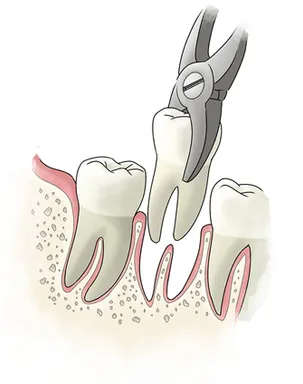
However well a person looks after their dental health, at some point in their life they may need to have one or several teeth extracted. The patient is prepared psychologically for the procedure. Anxious and sensitive patients are given sedatives beforehand, and after suitable anaesthesia the problem tooth is extracted.
How does the procedure go?
First stage: separating the gum and gripping the tooth
A suitable instrument (a straight elevator) is used to separate the gum from the tooth in the area of the neck and root. Then the right forceps are chosen and used to grip the tooth firmly, with the forceps reaching as close to the bone as possible. Whole teeth are extracted with forceps, while badly broken-down teeth or remaining roots are removed with elevators and root forceps.
Second stage: loosening the tooth
Once the tooth is properly and firmly gripped, it is loosened in the bone. For different teeth (multi-rooted or single-rooted), rocking movements are made in two directions, usually from the lips towards the tongue and back. For single-rooted front teeth, rotating movements (turning around the axis of the tooth) may also be used.
Third stage: lifting the tooth out of the socket
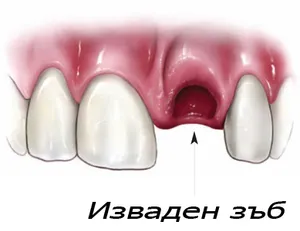
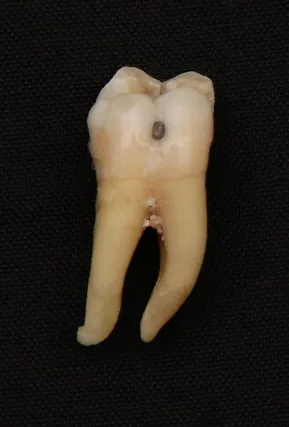
After the tooth has been loosened enough, it is lifted out of the bony socket with smooth movements and a slight twist following the curve of the tooth root. The extracted tooth and the socket are then examined for broken pieces or remaining parts of the roots.
Fourth stage: cleaning the wound
If everything is in order, after the extraction the walls of the bone wound are cleaned and pressed together to close it. When several adjacent teeth are extracted, the gum may be sutured for faster healing.
How many teeth are extracted in one visit?
Depending on the general condition, 2 or 3 adjacent teeth can be extracted in one visit. If several teeth need to be extracted but they are not adjacent, the aching tooth is extracted first and the other teeth at subsequent visits.
What should you do after the extraction?
Before leaving the clinic, the patient is instructed:
- not to eat for some time;
- not to drink hot liquids;
- not to smoke for as long as possible after the extraction;
- not to suck the blood clot that has formed in the wound.
This is key to proper, quick and painless healing. When the procedure goes normally, the gum wound closes in about a week, but the bone beneath it heals in about a month. During this time the patient must maintain good oral hygiene and, if necessary, consult their dentist.
What comes next, about a month later?
About a month after the extraction, prosthetic treatment with a bridge should begin. Otherwise the Godon phenomenon begins to appear.
How much does it cost?
A standard tooth extraction costs 50 – 80 €. All prices are in the price list.
Frequently asked questions
Does a tooth extraction hurt?
Extraction is done after suitable anaesthesia. Anxious and sensitive patients are also given sedatives beforehand.
How many teeth can be extracted in one visit?
Depending on the general condition – 2 or 3 adjacent teeth. If the teeth are not adjacent, the aching tooth is extracted first and the others at subsequent visits.
How long does the wound take to heal after an extraction?
When the procedure goes normally, the gum wound closes in about a week, and the bone beneath it heals in about a month.
What should not be done after the extraction?
The patient should not eat for some time, drink hot liquids, smoke for as long as possible after the extraction, or suck the blood clot in the wound.
When should prosthetic treatment begin?
About a month after the extraction prosthetic treatment with a bridge should begin, otherwise the Godon phenomenon begins to appear.