

An abscess is an acute inflammation of tissue of limited size, with the formation of a cavity filled with pus. In the teeth it is most often a complication of a disease of the tooth or of its supporting apparatus, and it is treated according to its type and stage.
What is an abscess and what does its development depend on?
The development of an abscess depends on the patient’s general state of health, the type and virulence of the microorganisms, and the anatomical and structural features of the area where it is located.
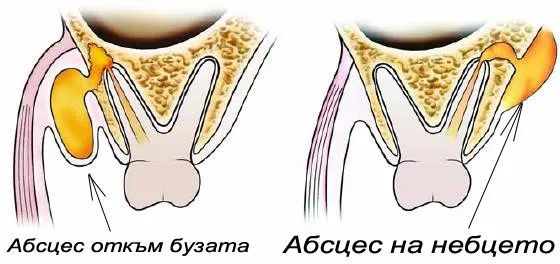
What causes an abscess?
The most common microbial causes are streptococci and staphylococci. The infection can spread:
- through the canals of diseased teeth;
- along naturally existing channels in the bone;
- by gradual breakdown of the bone;
- through the lymph or the blood, when there is a pus-forming inflammation elsewhere in the body.
What types of abscess are there?
Endodontic abscess
Abscesses that develop as complications of tooth diseases – periapical periodontitis, cysts, untreated pulpitis – are called endodontic abscesses. In them the infection has entered through the root canal of the tooth. It is treated in a similar way to periapical periodontitis.
It is characterised by severe pain in the affected tooth or the surrounding tissues. Swelling develops, which in the early stages is hard and then softens (fills with pus). The mucosa is red and painful, and may become thin so that it breaks through spontaneously and pus drains out.
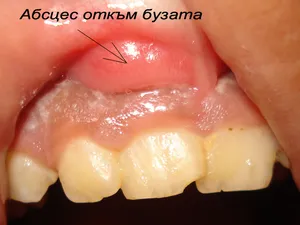
The patient has a general feeling of being unwell, a high temperature, weakness, difficulty eating and bad breath. The tooth responsible is usually dark with a large cavity, or has had root canal treatment.
Periodontal abscess
Abscesses that develop as complications of diseases of the tooth’s supporting apparatus (the periodontium) – periodontitis, difficult eruption of wisdom teeth, osteomyelitis – are called periodontal abscesses. In them the infection passes around the root of the tooth through an existing bone pocket and the inflamed gum.
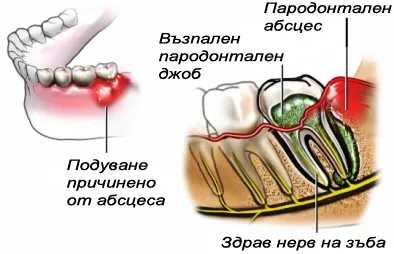
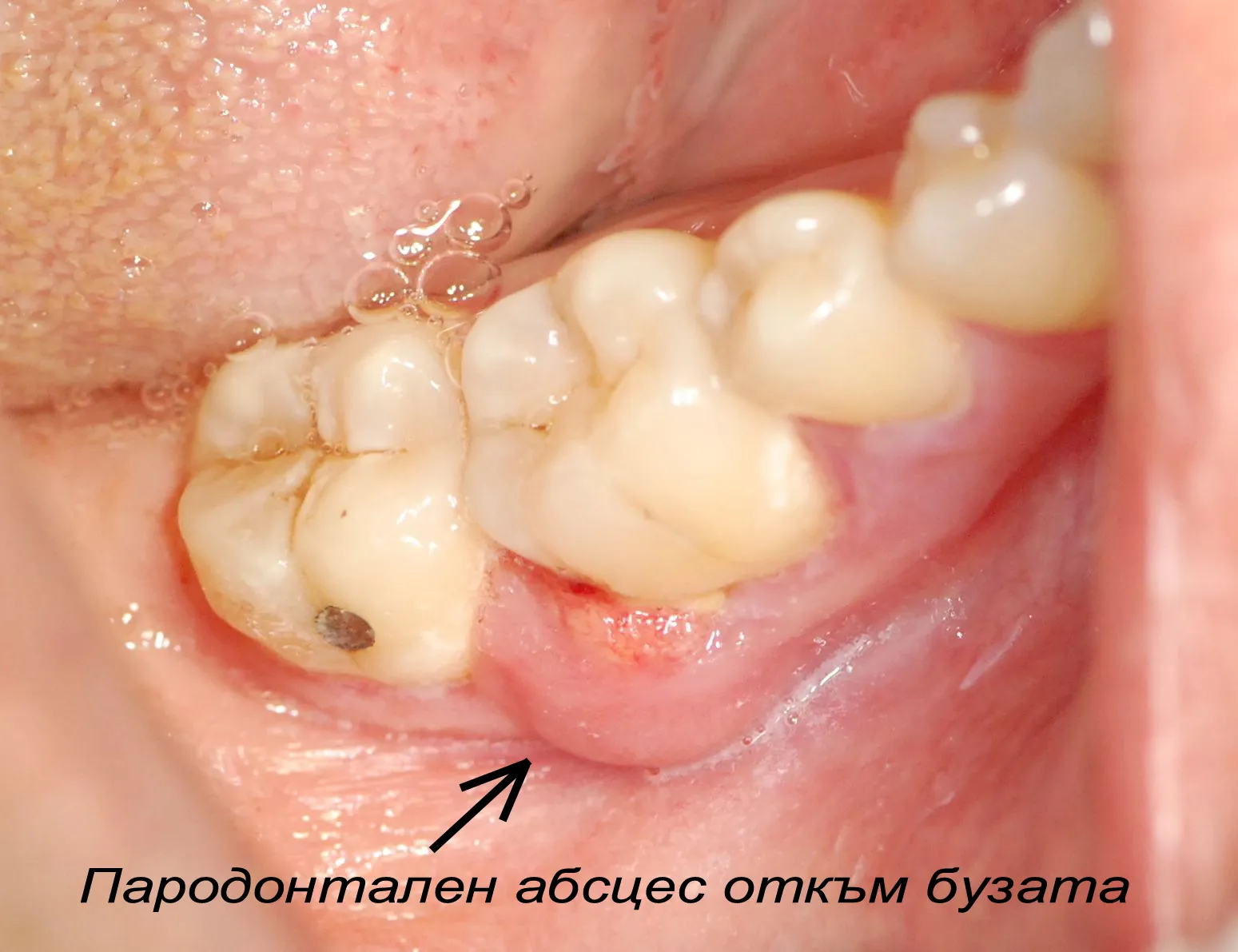
The symptoms are the same as in endodontic abscesses, except that the tooth around which the abscess develops is alive, not as painful and of normal colour. The swelling is often located between two teeth, and pus drains out on pressure or when the gum is opened.
How is an abscess treated?
For an endodontic abscess, treatment depends on the stage at which it is diagnosed and may be opening the tooth, incision and drainage, or even extraction of the tooth. See treatment of a dental abscess.
In milder forms of periodontal abscess, cleaning and drainage of the periodontal pocket is enough to bring the inflammation under control. In more advanced stages, treatment depends on the patient’s complaints and the severity of the abscess. See treatment of a periodontal abscess.
Frequently asked questions
What is a dental abscess?
An abscess is an acute inflammation of tissue of limited size, with the formation of a cavity filled with pus.
What are the most common causes of an abscess?
The most common microbial causes are streptococci and staphylococci. The infection can spread through the canals of diseased teeth, along naturally existing channels in the bone, by gradual breakdown of the bone, or through the lymph or the blood.
What are the symptoms of an endodontic abscess?
Severe pain in the affected tooth or the surrounding tissues, swelling that is first hard and then softens, a red and painful mucosa, a general feeling of being unwell, a high temperature, difficulty eating and bad breath.
How does a periodontal abscess differ from an endodontic one?
The symptoms are the same, but the tooth around the abscess is alive, not as painful and of normal colour. The swelling is often between two teeth, and pus drains out on pressure or when the gum is opened.
How is an abscess treated?
For an endodontic abscess, treatment may be opening the tooth, incision and drainage, or extraction of the tooth. In milder periodontal abscesses, cleaning and drainage of the periodontal pocket is enough.