

An endodontic abscess is a localised collection of pus in the soft tissues and bone around the causative tooth. It is treated by letting the pus drain, acting on the bacteria with an antibiotic chosen by the dentist, and treating the causative tooth.
What is an endodontic abscess and why does it appear?
An endodontic abscess involves the soft tissues and bone around the causative tooth. It develops as a result of untreated or incorrectly treated pulpitis or periapical periodontitis.
How is an endodontic abscess treated?
The main treatment is to let the pus that has collected in the tissues drain and to act on the bacteria causing the inflammation. The bacteria are eliminated with an antibiotic chosen by the dentist; taking vitamins is also recommended.
The pus is removed at the dental clinic in several ways, depending on the location of the focus of pus and the severity of the abscess.
How does treatment go for milder abscesses?
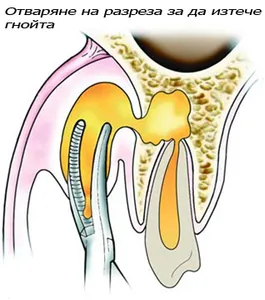
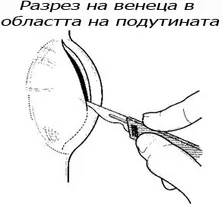
- An incision is made (the gum is cut open over the swelling) and a drain (a rubber strip or plastic tube) is placed to let the pus drain away.
- The tooth causing the abscess is found.
- The pulp chamber is opened, and the root canals are irrigated and serve as a separate path for the pus to drain.
- Once the acute abscess has calmed down, the root canals are irrigated regularly with special solutions that destroy all the bacteria in them. The irrigation continues until the process has completely subsided and the pus and discharge from the canals have stopped.
- Only then are the canals filled and the tooth restored.
When does the tooth have to be extracted?
In very severe abscesses, and when the root canals of the causative tooth are curved and impassable, the tooth has to be extracted.
Frequently asked questions
Why does an endodontic abscess appear?
It develops as a result of untreated or incorrectly treated pulpitis or periapical periodontitis.
How is an endodontic abscess treated?
The main treatment is to let the pus drain and to act on the bacteria causing the inflammation. For milder abscesses the gum is cut open and a drain is placed, after which the causative tooth is found and treated.
Is an antibiotic needed?
The bacteria are eliminated with an antibiotic chosen by the dentist. Taking vitamins is also recommended.
When does the tooth have to be extracted?
In very severe abscesses, and when the root canals of the causative tooth are curved and impassable.