

Mouth ulcers (aphthae) are lesions of the oral mucosa, round or oval in shape and surrounded by a bright red halo. Their base is whitish (yellowish). They most often appear with viral and bacterial infections and after biting the lip or cheek, and they heal in about a week to 10–12 days.
What do mouth ulcers look like?
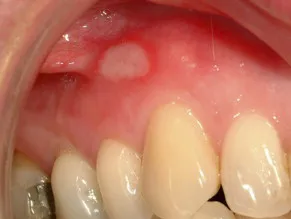
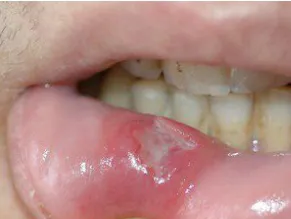
What causes mouth ulcers?
They are a manifestation of the disease aphthous stomatitis. They are most often caused by viral and bacterial infections (flu, scarlet fever, stomach disorders and others), and also by biting the lip or cheek. They affect mainly children and less often adults. They may appear seasonally (winter, spring). They have an acute or chronic course.
What are the symptoms?
Acute mouth ulcers
Acute aphthous processes result from past infectious diseases and reduced defences of the body, and also from biting. They begin suddenly with a temperature, loss of appetite, weakness and painful dryness in the mouth.
On examination, several small round ulcers can be seen on the cheeks, lips, side edges and underside of the tongue. They are very painful when eating and speaking. They look like white spots on the reddened mucosa.
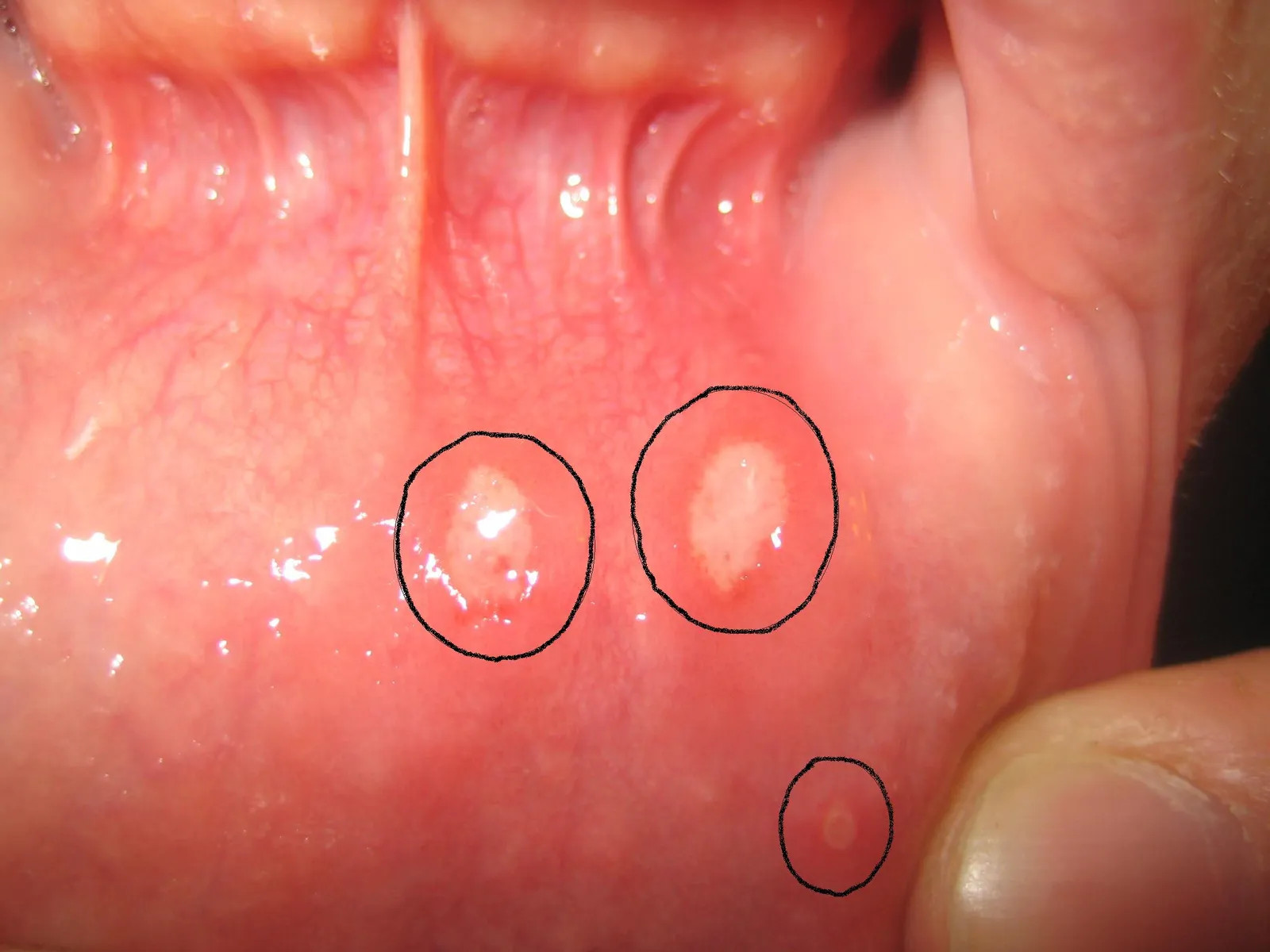
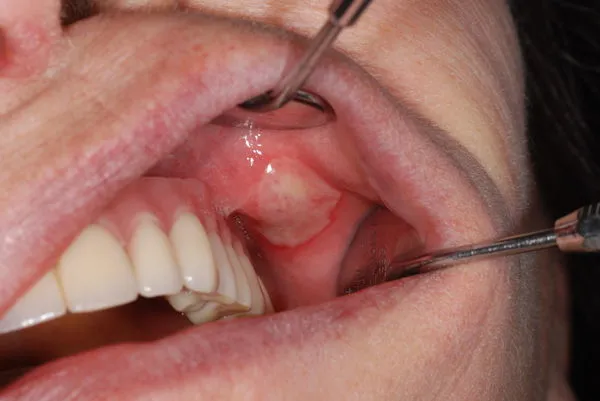
With ulcers that develop after biting, the shape may vary depending on the bite. There is bad breath. The submandibular lymph nodes are enlarged and painful, and there may also be a raised temperature. They heal within 10–12 days after local application and general treatment. Lasting immunity remains.
Chronic mouth ulcers
Chronic ulcers often recur (come back). They appear with endocrine disorders, allergies, vitamin deficiencies, infections, poor oral hygiene and others. They cause milder complaints.

In the mouth, 2–3 ulcers can be seen on the tip and side edges of the tongue, the lining of the lips, the cheeks and the soft palate. They are painful when eating and speaking. They heal in about a week.
Poor oral hygiene, tartar, sharp edges of untreated teeth, dentures and so on play a certain role in frequent recurrences.
How are mouth ulcers treated?
Acute ulcers heal within 10–12 days after local application and general treatment. When aphthous conditions are due to general diseases, a consultation with the relevant specialist is necessary.
Frequently asked questions
What are mouth ulcers?
Mouth ulcers are lesions of the oral mucosa, round or oval in shape and surrounded by a bright red halo. Their base is whitish (yellowish).
What causes mouth ulcers?
Most often viral and bacterial infections (flu, scarlet fever, stomach disorders), and also biting. They are a manifestation of the disease aphthous stomatitis.
How long do mouth ulcers take to heal?
Acute ulcers heal within 10–12 days after local application and general treatment, and lasting immunity remains. Chronic ones heal in about a week.
Why do mouth ulcers keep coming back?
Chronic ulcers often recur. They appear with endocrine disorders, allergies, vitamin deficiencies, infections and poor oral hygiene, and tartar and the sharp edges of untreated teeth and dentures also play a role.
When is a consultation with a specialist needed?
When aphthous conditions are due to general diseases, a consultation with the relevant specialist is necessary.