

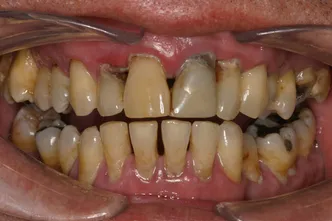
Periodontitis is a disease characterised by inflammation and bleeding of the gums, exposure of the tooth roots and loosening of the teeth. In many cases it develops as a result of untreated gingivitis. It can affect a single tooth, a group of teeth or all the teeth. Its treatment depends on its severity and the degree of tooth mobility.
What causes periodontitis?
There are many causes of periodontal disease. The leading factors are:
- heavy tartar build-up;
- incorrectly made proximal fillings;
- poorly made bridges and crowns;
- parafunctions (clenching or grinding of the teeth);
- teeth in an incorrect position (crowded or displaced);
- trauma.
Periodontitis occurs in children as well as in adults. There is also age-related periodontitis, which develops after the age of 50 and is associated with a decline in the protective and restorative capacities of the periodontium. It can occur on its own or as a symptom of a general disease (diabetes, gastrointestinal diseases, kidney diseases, etc.).
How does periodontitis develop?
The mechanism of development is very complex. The process begins with inflammation of the gum in the area of the neck of the tooth, accompanied by redness and bleeding (gingivitis). The cause is the build-up of dental plaque and the formation of tartar.
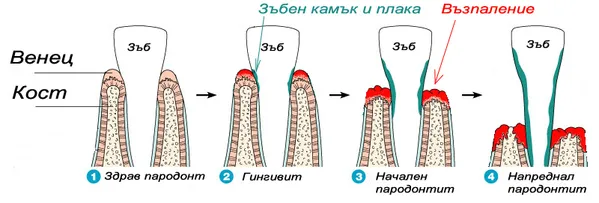
If the tartar is not cleaned off at this stage, it starts to grow towards the gum and pushes it down and aside, wedging itself between the gum and the root of the tooth. In this way the tartar and the inflammation reach close to the bone, which reacts to the inflammation by receding from the tooth root. This produces so-called periodontal pockets.
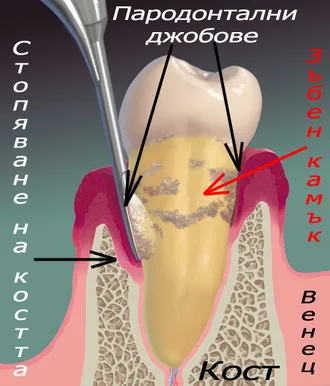
These are defects in the bone that are covered by overgrown gum. Once a periodontal pocket has formed, the process is already irreversible, because it is impossible to clean the bottom of the pocket and there is always inflammation.
What are the symptoms and stages?
An X-ray shows the loss of alveolar bone around the teeth. Left untreated for years, periodontitis can flare up or become chronic and pass through different stages.
The patient’s complaints can range from minor (burning, itching, “pins and needles”, bleeding gums) to severe (very painful and bleeding gums, from which purulent discharge seeps). Over time the gum and the bone recede and the roots of the teeth are exposed. When 1/3 of the root is exposed, the tooth becomes mobile, the gaps between the teeth widen and they shift.
This further worsens the course of the disease, and if no measures are again taken, its progression leads to the loss of the tooth or teeth, which in many cases are healthy.
Also characteristic is a fan-shaped spreading of the incisors of the upper and lower jaw. Periodontitis is also marked by pronounced seasonality: complaints usually intensify in spring and autumn. When a general disease is present (diabetes), complaints may last all year round.
Horizontal and vertical resorption
Depending on the type of periodontitis, the X-ray shows breakdown of the bone – horizontal or vertical resorption.
Healthy periodontium // Advanced periodontitis with horizontal and vertical bone loss
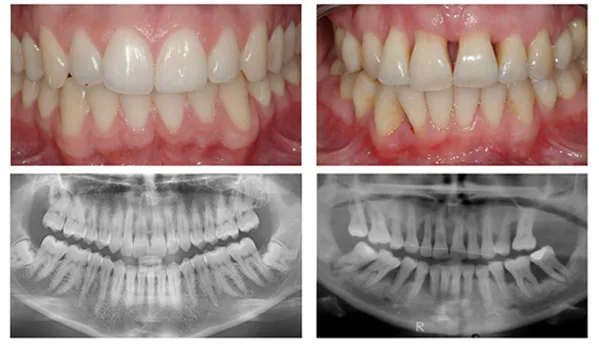
- Horizontal resorption is less favourable for treatment, because it affects most or all of the teeth and leads to overall breakdown of the bone and loosening of all the teeth.
- Vertical resorption is a funnel-shaped breakdown of the bone around the root of one or several teeth. This type of bone defect responds to treatment by bone grafting.
In the advanced stages, complications such as a periodontal abscess may occur, which develops when deep bone pockets are present.
How is periodontitis treated?
If the treatment is adequate and timely, the process is stabilised at the level it has reached, and further loss of the tooth-supporting bone is stopped. Treatment of periodontitis consists of several procedures, depending on its severity and the degree of tooth mobility.
Regular and thorough cleaning of subgingival and supragingival tartar is extremely important for the prevention and treatment of the early stages, as are regular preventive check-ups for early diagnosis.
Frequently asked questions
What is periodontitis?
A disease characterised by inflammation and bleeding of the gums, exposure of the tooth roots and loosening of the teeth. In many cases it develops as a result of untreated gingivitis.
What are the leading factors behind periodontitis?
Heavy tartar build-up, incorrectly made proximal fillings, poorly made bridges and crowns, parafunctions, teeth in an incorrect position and trauma.
Is a periodontal pocket reversible?
No. Once a periodontal pocket has formed, the process is already irreversible, because it is impossible to clean the bottom of the pocket and there is always inflammation.
What happens if periodontitis is not treated?
The gum and the bone recede, the roots are exposed, the teeth become mobile and shift, and the progression leads to the loss of the tooth or teeth, which in many cases are healthy.
How can periodontitis be prevented?
Regular and thorough cleaning of subgingival and supragingival tartar is important, as are regular preventive check-ups for early diagnosis.