

Periapical periodontitis is an inflammation of the tissue around the root of the tooth (the periodontium), most often a complication of untreated caries, pulpitis, injury to the teeth or drug-related damage. It runs an acute or a chronic course. With timely diagnosis and correct treatment, the tooth is preserved and healing follows.
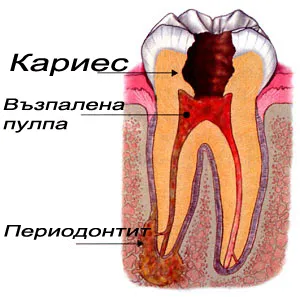
What is periapical periodontitis and what causes it?
These are inflammatory diseases in which bacteria from the oral cavity pass through the root canals into the periodontium (the tissue around the root of the tooth) and cause inflammation there, which also involves the bone around the tip of the root.
How does periapical periodontitis progress?
It runs an acute or a chronic course.
Acute periapical periodontitis
Acute periapical periodontitis develops when there are large numbers of bacteria and the body’s defences are reduced. It is characterised by the formation of pus. The tooth may have had root canal treatment or have a large cavity.
What are the symptoms?
- At first there is a feeling of heaviness, pressure and discomfort on the side of the diseased tooth.
- The pain is localised to a single tooth, which feels higher than the others. It is dull and constant, and painkillers act only briefly.
- With suppuration (acute purulent periodontitis) the pain grows stronger and throbbing, and every touch of the tooth (with the tongue or with the other teeth) is extremely painful.
- Eating is difficult or impossible.
- Heat makes the pain worse, while cold temporarily soothes it.
Phases of acute purulent periodontitis
It passes through four phases, depending on where the pus is located:
- First phase (periodontal) – the inflammation has involved the area around the tip of the tooth root.
- Second phase (intraosseous) – the inflammation (pus) spreads into the bone around the tooth root.
- Third phase (subperiosteal) – the pus passes through the bone and reaches the periosteum (this is the most painful phase).
- Fourth phase (submucosal) – this is a periodontal abscess.
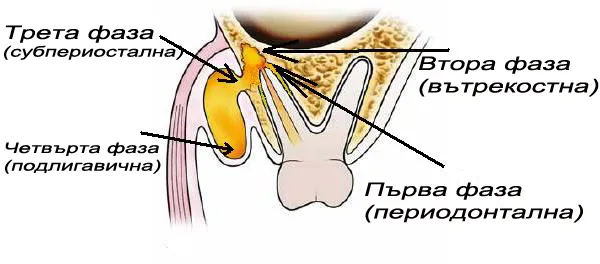
Sometimes the phases pass quickly and the periodontitis is diagnosed when it has involved the whole periodontium (the end of the second phase or the start of the third). In acute processes the submandibular lymph nodes enlarge, and there is fatigue, fever and general malaise. If treatment is not given in time, it leads to an endodontic abscess.
Chronic periapical periodontitis
Chronic periapical periodontitis is a slowly developing and long-lasting inflammatory reaction. It develops as a complication of pulpitis, acute periodontitis or injury.
As a result of chronic bacterial irritation in the root canals, granulation tissue forms in the destroyed areas of the periodontium. This happens with fewer bacteria and with a stronger immune system, where the body manages to fight the infection.
Granulation tissue (granuloma) is soft tissue, similar in appearance to gum, that forms around the tip of the root. The body forms it to stop the bacteria entering through the root of the tooth from spreading into the bone. The longer the root canal stays open and the bacteria enter freely, the larger the granuloma becomes, and its growth comes at the expense of gradual loss of bone.
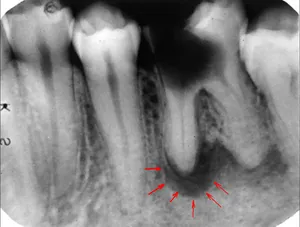
In most cases the process runs without any complaints. It is found on an X-ray taken by chance while treating a nearby tooth. The X-ray shows a dark round or elliptical formation around the tip of the tooth root. Some patients feel discomfort when chewing hard food.
As a result of a general illness (flu, scarlet fever, a cold) and reduced defences of the body, the symptoms intensify and the periodontitis flares up – the granuloma may suppurate, and severe pain and a fistula may appear.
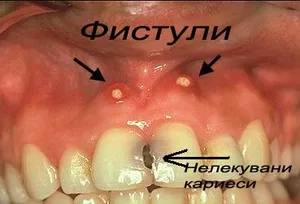
On examination, untreated caries and a fistula (a bony tract through which pus from the area of the root tip has reached the mucosa) are found, with discharge draining through it. The fistula is raised and located over the roots of the diseased tooth, and the patient may have mild pain in the tooth.
How is periapical periodontitis treated?
The method of treatment is chosen depending on the condition of the root canals, the patient’s general condition, age and the virulence of the infection.
With timely diagnosis and correct treatment, the tooth is preserved and healing follows. In severe cases extraction – removal of the tooth – is needed. If left untreated, the granuloma turns into a cyst over time.
Frequently asked questions
How does acute periapical periodontitis feel?
The pain is localised to a single tooth, which feels higher than the others. It is dull and constant, and painkillers act only briefly. With suppuration the pain becomes throbbing and every touch of the tooth is extremely painful.
How many phases does acute purulent periodontitis pass through?
Four: periodontal, intraosseous, subperiosteal (the most painful) and submucosal, which is a periodontal abscess.
Why does chronic periodontitis often go unnoticed?
In most cases it runs without any complaints and is found on an X-ray taken by chance while treating a nearby tooth.
Can the tooth be saved?
With timely diagnosis and correct treatment, the tooth is preserved and healing follows. In severe cases extraction is needed.
What happens if a granuloma is left untreated?
If left untreated, the granuloma turns into a cyst over time.