

A radicular cyst develops as a result of untreated periapical periodontitis (granuloma). It is a fluid-filled cavity around the tip of the tooth root, which usually causes no pain and is found by chance on an X-ray. Treatment is surgical and depends on the size of the cyst and the patient’s complaints.
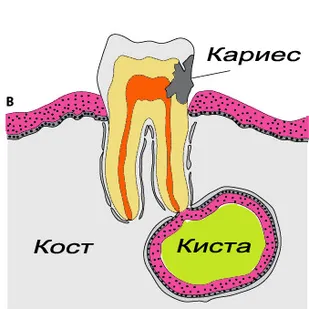
What is a radicular cyst and what causes it?
It is a central cavity located around the apex (root tip) of the tooth, filled with fluid and lined with epithelium (a tissue layer similar to the surface of the oral mucosa). The fluid of the cyst is pale yellow, viscous and rich in cholesterol.
The cause is untreated periapical periodontitis (granuloma).
What are the symptoms?
Cysts develop without symptoms (there is no pain). With very large cysts there may be discomfort in the area of the cyst. They are usually found by chance on an X-ray.
The first sign of a developing radicular cyst may be a swelling in the jaw. As the cyst grows, the teeth are pushed aside – their crowns tilt (move closer together) and their roots move apart. Tooth mobility may increase.
The pulp (nerve) of the affected teeth does not react to any stimulus – the causative tooth is dead. The cyst may fill with pus and form a fistula (a bone opening) in the area of the root of the causative tooth. This fistula is flat, slightly concave and hard to notice. When pressed, a yellowish fluid flows from it.
What does it look like on an X-ray?
A radicular cyst has a characteristic appearance – a darker, round or elliptical “balloon” around the root of the causative tooth, which has pushed the roots of the neighbouring teeth aside. A thin white line (sclerotic rim) can be seen at the border between the wall of the cyst and the bone.
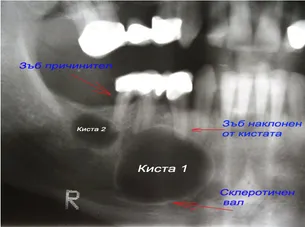
This rim is a protective process of the bone, which resists the growth of the cyst.
How is it treated?
Treatment depends on the size of the cyst and the patient’s complaints. The cyst is removed surgically. With small cysts this is done by apical osteotomy. With large cysts the operations are more complex and depend on the size and position of the cyst.
Frequently asked questions
What causes a radicular cyst?
Untreated periapical periodontitis (granuloma).
Does a radicular cyst hurt?
No. Cysts develop without symptoms, and with very large cysts there may be discomfort in the area of the cyst. They are usually found by chance on an X-ray.
How is it recognised on an X-ray?
As a darker, round or elliptical “balloon” around the root of the causative tooth, with a thin white line (sclerotic rim) at the border with the bone.
How is a radicular cyst treated?
It is removed surgically. With small cysts this is done by apical osteotomy, while with large cysts the operations are more complex and depend on the size and position of the cyst.