

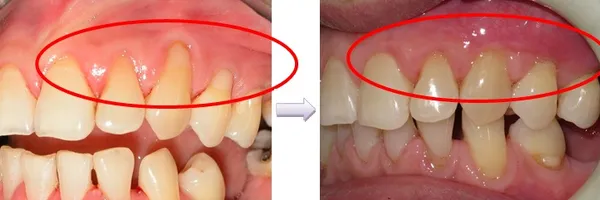
Non-inflammatory gingival recession (receding gums) is treated in two main stages: first the cause of the recession is removed, and then a microsurgical plastic operation restores the level of the bone and gum as required.
What is the first stage – removing the cause?
What is done in the first stage depends on the cause of the recession:
- Incorrect tooth brushing (most often using horizontal instead of vertical movements) – the brushing technique is corrected.
- Incorrect prosthetic treatment with removable partial dentures – the causal factor is corrected: incorrectly made clasps or inaccuracies in the plastic part of the denture.
- Poorly made bridges and crowns – the problem restorations are removed and temporary ones made of plastic are placed. Once the second (surgical) stage is complete, they are replaced with new, correctly made permanent restorations.
- Clenching and grinding of the teeth – the plastic covering of the exposed root can be undertaken after the parafunctions have been corrected (see clenching and grinding of the teeth).
- High-attached muscle bands and frenula – the first stage is to correct the anatomical defect through a plastic periodontal operation called frenectomy. The frenum is a small fold of mucosa that connects the inner side of the lips to the gum.
What is the second stage – the microsurgical operation?
The second stage is the microsurgical periodontal operation. It can be either mucosal grafting alone or mucosal grafting combined with bone grafting. Which of the two methods is chosen depends on the size of the recession and the dentist’s assessment.
Gum grafting
In many cases of gingival recession there is not enough soft tissue to cover the exposed part of the root, and it has to be added from another site. Read more about mucosal grafting.
Bone grafting
In more severe gingival recession the teeth become loose because of the loss of tooth-supporting bone. Bone grafting restores the normal level of the bone. Read more about bone grafting.
Frequently asked questions
In how many stages is gingival recession treated?
In two main stages: first the cause of the recession is removed, and then a microsurgical plastic operation is carried out.
What is done in the first stage of treatment?
The cause of the recession is corrected – for example the tooth brushing technique, incorrectly made denture clasps or incorrectly made bridges and crowns, parafunctions such as clenching and grinding of the teeth, or high-attached muscle bands and frenula.
What are the methods of the microsurgical operation?
Either mucosal grafting alone or mucosal grafting combined with bone grafting.
What does the choice between mucosal grafting and bone grafting depend on?
On the size of the recession and the dentist’s assessment.