
The operation to place a single implant is a light micro-surgical procedure done on an outpatient basis under local anaesthesia. The procedure itself is painless, and for a single implant the operation itself takes about 30 – 40 minutes (the time at the clinic is on average about 40 min to 1 hour). A 3D scan is always done beforehand, and treatment is supported by antibiotic preparation. Everything is described here – from planning to possible complications and contraindications.
How is the position of the implant planned?
Prosthetic templates, surgical guides, computer-guided implantology.
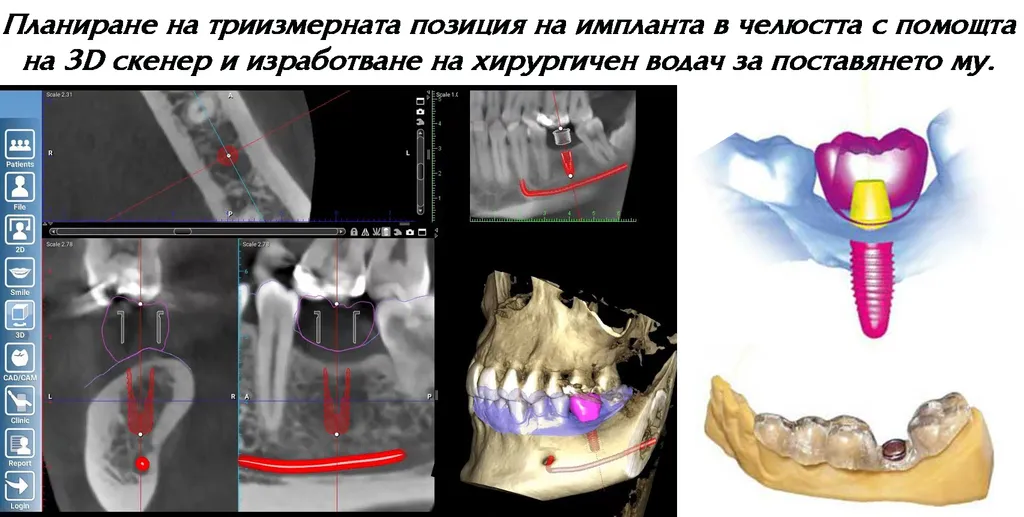
Modern implant treatment is an extremely precise and predictable procedure. In prosthetically guided implantology, the correct position of the implant in the bone is of the utmost importance for the success of the treatment. That is why a 3D CBCT (cone beam computed tomography) scan is always needed before an implant is placed, allowing us to see the jawbone and all its structures as a 3D image. Nowadays, placing implants without a 3D examination is an act of extreme boldness bordering on recklessness.
With modern software for digital planning we have special libraries of digital images of implants at real size. We can place them virtually in the image from the 3D scanner and so find the most favourable position for the implant.
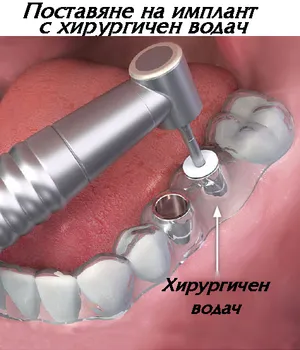
Using a 3D printer, we can print an individual surgical guide to use during the operation. It is a special splint that fits exactly over the existing teeth. In the area where we will place the implant, it has a special opening that guides us when drilling the bone to the three-dimensional position of the implant determined on the scan.
This avoids incorrect positioning and the likelihood of affecting important structures that exists when an implant is placed without a guide. Computer-guided implantology makes treatment much safer and more predictable and reduces to a minimum the risk of problems in the subsequent prosthetic stage.
What is the antibiotic preparation before the operation?

So-called antibiotic protection is of the utmost importance for treatment to go well at the stage of placing the implant. We prescribe a special combination of antibiotics, vitamins, probiotics and other supporting medicines, taken on a special schedule from the day before the operation and for at least 7 days after it.
This avoids the possibility of inflammatory processes arising when the implant is placed and until the surgical wound has healed. In patients who for some reason refuse to take antibiotics or have not been prescribed them, there is a high rate of inflammatory complications, a more difficult recovery period and poorer long-term survival of the implants.
How is the implant procedure performed?
Placing a single implant is a light micro-surgical procedure and is done on an outpatient basis. The procedure itself is painless and, according to patients, is sometimes even easier than a normal tooth extraction.
It is done under local anaesthesia, which is fully sufficient for the patient to feel no pain at all. General anaesthesia for implant placement is indicated only for patients with disabilities, when they are themselves uncontrollable. In all other cases, offering and using general anaesthesia is undesirable because of its many harmful effects on the body and the risks to health.
Once the anaesthetic has taken effect, the procedure is divided into 3 stages.
Stage 1: opening the gum
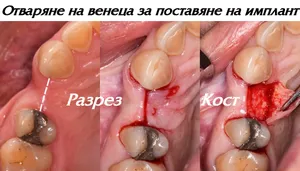
A small incision only a few millimetres long is made in the area between the two teeth where the implant will be placed. Then, using special instruments, the gum is opened slightly, just enough to see the surface of the bone in which the implant will be placed. This stage usually takes no more than 10 minutes.
Stage 2: osteotomy and screwing in the implant
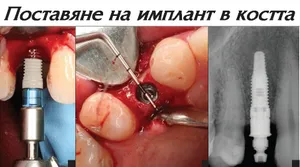
The osteotomy (the hole for the implant) is created and the implant is screwed into the bone. This is done with specially calibrated burs or the new Versah burs, using successively different thicknesses until the right size for the implant is reached.
Once the osteotomy has been shaped, the implant is taken out of its sterile packaging and slowly turned into the bone. A special ultrasonic device measures the primary stability (how firmly it is seated in the bone), and a decision is made whether to suture it under the gum or to place a healing abutment, to save the second surgical intervention to uncover it. This stage usually takes 15 – 20 minutes.
Stage 3: suturing
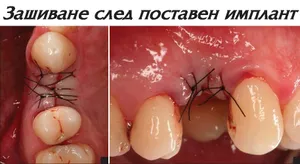
This is the last stage and its purpose is to cover the implant and ensure that it heals without disturbance. It is done with special extremely thin micro-sutures, also used in eye surgery. This closes the wound tightly and healing is undisturbed. This stage usually takes about 10 minutes.
How long does it take and how much does it cost to place an implant?

Placing a single implant is extremely short – sometimes it takes less time than treating a deep cavity. The operation itself takes about 30 – 40 minutes, and on average the time needed at the clinic is about 40 min to 1 hour.
- 2 implants next to each other – again about an hour;
- implants in 2 different areas, for example the upper and lower jaw – about 1 hour 30 min;
- 6 or more implants – about 3 hours on average.
Placing a Zimmer implant costs 900 – 1000 €, and placing a BTK implant costs from 600 €. The price covers the implant placement only; the abutment and the crown are charged separately, depending on the material and type of crown. All prices are in the Price list.
What is the post-operative period like?
Placing a dental implant is a micro-surgical procedure and the recovery period is light. Patients are fully able to work after such a procedure.
After the operation we usually advise the patient to take 1 painkiller before the anaesthetic wears off. In this way some patients have no pain at all after the implant is placed, and in others it is minimal. Serious pain after implant placement indicates a problem or very rough handling.

Up to the 3rd day after the operation, but only in some patients, swelling of the cheek may appear in the area of the implant. From the 4th day it starts to go down and by the 7th – 10th day it has disappeared completely.
A check-up the day after implant placement is recommended, to see the condition of the stitches and, if needed, to place additional sutures. After implant placement, patients are given special written instructions on brushing the teeth, protecting the surgical wound and actions that help proper and quick healing.
What complications are possible after implant placement?
Two kinds of complications are possible after implant placement – early and late.
Early ones are in most cases related to poor planning (without 3D) and careless placement of the implants. They involve damage to certain anatomical structures in the jaw, such as the nerve that provides sensation in the lower jaw. Early inflammatory complications are also possible in patients who do not follow the instructions after implant placement, do not take the prescribed antibiotics, smoke or neglect the oral hygiene instructions.
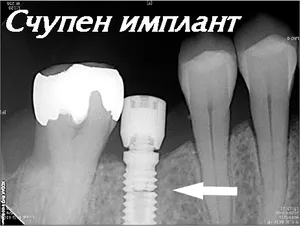
Late complications are usually related to implant fracture or peri-implantitis.
Implant fracture is a rare occurrence. It is usually seen in low- and mid-range implants, which do not use high-grade titanium alloys. It can also be seen in high-end implants when the prosthetic construction has been planned incorrectly.
What is peri-implantitis?
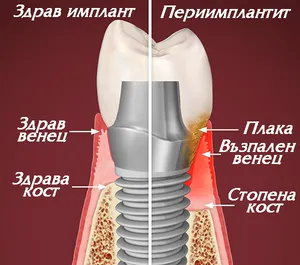
The more common late complication is the development of peri-implantitis. It is infection and breakdown of the bone around the implant, leading to the implant loosening and falling out – similar to periodontitis.
Peri-implantitis is a bacterial disease around implants. It can develop both in the early pre-prosthetic phase (before the crown is placed on the implant) as a result of infection of the implant surface, and in the phase after prosthetic restoration as a result of plaque retention. Plaque retention after prosthetic restoration may be due to poor fabrication of the prosthetic constructions (the presence of ledges) or to the patient not cleaning them.
What is specific about peri-implantitis is that once it has developed, it is very hard to treat and to influence, and that is why it is the most common cause of implant loss.
How exactly does peri-implantitis occur?
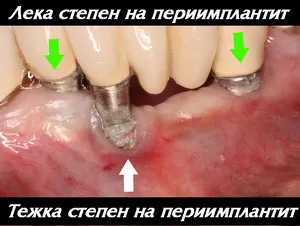
When uncleaned dental plaque is present around the implant crown, the gum becomes inflamed because of the bacteria in the plaque. The gum is the main structure that protects the implant from the harmful factors in the oral cavity. When it is inflamed, bacteria penetrate towards the implant itself. If the area around the crown is cleaned well, the inflammation is brought under control, the gum recovers and there are no consequences.
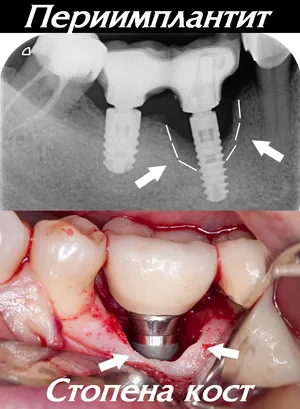
If, however, the patient continues not to clean, the inflammation progresses and spreads to the bone. This leads to breakdown of the bone and exposure of the top part of the implant. The surface of the implant is micro-rough so that bone cells can attach to it. These micro-roughnesses are extremely suitable for retaining bacteria, and once infected, the implant surface cannot easily be cleaned. From then on, losing the implant sooner or later is certain.
In the early stages of peri-implantitis the infected surface is small. With strong antibiotics, special cleaning, covering the implant with bone graft material and closing it again under the gum, the process can be brought under control and the implant saved.
In conclusion: peri-implantitis, not rejection, is the main cause of problems with implants and is mainly due to poor hygiene.
When is an implant contraindicated?
Poor hygiene
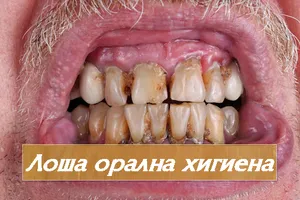
The main contraindication for implant treatment is poor hygiene. It leads to the development of peri-implantitis (wrongly called implant rejection). Patients who want implants must know that cleaning the constructions perfectly is entirely their own personal responsibility and obligation. In patients with poor cleaning, the success rate of treatment is lower than in patients with good hygiene.
Smoking
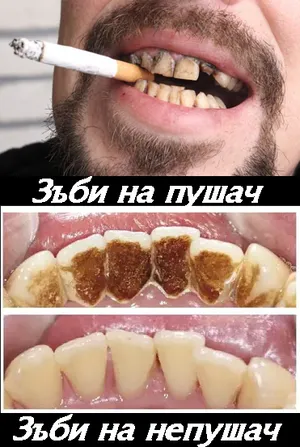
Another serious contraindication is smoking. Smoking in itself does not harm the implant, but it harms the gum very seriously, and the gum is the main protection of the bone and the implant. In smokers, cigarette smoke causes the micro blood vessels of the gum to constrict and the blood supply to be impaired. This greatly reduces its protective abilities and it cannot resist the entry of bacteria. Smokers are therefore highly predisposed to developing peri-implantitis in both periods of implant treatment.
In the first 4 – 5 days immediately after the implant is placed it is advisable not to smoke, because cigarette smoke dries the edges of the surgical wound, reduces blood flow in the area and so slows the healing of the gum. This leads to a high risk of infection of the implant.
In the long term, smoking is a serious problem when combined with poor hygiene. Accumulated plaque is a reservoir of bacteria, and smoking stops the body defending itself against them. In smokers with excellent hygiene the success rate is good – the microbial count is low, the gums are calm and implant treatment can be carried out.
Diabetes
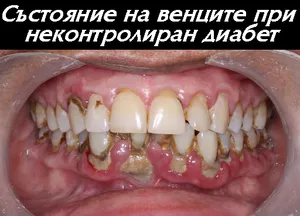
In patients with diabetes, the body’s defences are again seriously reduced, including those of the gum, which is prone to inflammation. Healing processes are slow and difficult, and implants carry an increased risk of infection and development of peri-implantitis because wounds close slowly.
Still, diabetes is not an absolute contraindication. In milder cases with perfect hygiene, no smoking and very good blood sugar control, with values not exceeding 7, implant treatment could be carried out.
Osteoporosis
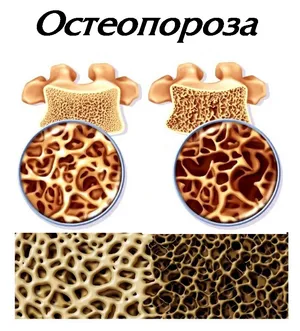
Osteoporosis is not a direct contraindication for placing dental implants. According to some clinical studies, the success rate is the same in patients with and without osteoporosis. However, a certain amount of care is needed when planning and carrying out treatment because of the more brittle bone structure.
It is good to allow somewhat longer periods of osseointegration, gradual loading, and care when creating the osteotomy and placing the implant. In osteoporosis it is advisable for the implants to be evenly distributed in the jaw and greater in number, to ensure an even distribution of chewing load across the whole jaw.
Patients with proven osteoporosis of the jaws should avoid “All-on-4” implants, but options on 6 or even 8 are favourable because there are no overhanging parts.
Frequently asked questions
Is placing an implant painful?
The procedure is painless and, according to patients, is sometimes even easier than a normal tooth extraction. It is done under local anaesthesia, which is fully sufficient for the patient to feel no pain at all.
How long does it take to place an implant?
For a single implant, the operation itself takes about 30 – 40 minutes, and the time at the clinic is on average about 40 min to 1 hour. For 2 implants next to each other – about an hour, for implants in 2 different areas – about 1 hour 30 min, and for 6 or more – about 3 hours.
Why is a 3D scan needed before an implant?
The 3D CBCT scan shows the jawbone and all its structures as a 3D image and allows the most favourable position of the implant to be planned. Placing implants without a 3D examination borders on recklessness.
What is peri-implantitis?
A bacterial disease around implants – infection and breakdown of the bone around the implant, leading to the implant loosening and falling out. It is mainly due to poor hygiene and is the most common cause of implant loss.
When is an implant contraindicated?
The main contraindication is poor hygiene, followed by smoking. Diabetes and osteoporosis are not absolute contraindications, but they require extra care in planning and treatment.