

Red aesthetics is the colour, shape and level of the gum around the necks of the teeth – a key stage in achieving a beautiful smile. The appearance of the gum is no less important than that of the teeth themselves, as the two are inseparably linked.
What is red aesthetics?
In the broadest sense, red aesthetics is the condition of the gum: its colour, shape and level. Achieving red and white (the look of the teeth) aesthetics is a condition for a beautiful smile, which will make an impression on others and give the person smiling a unique charm.
When does the gum spoil the aesthetics of a smile?
Gingival recession
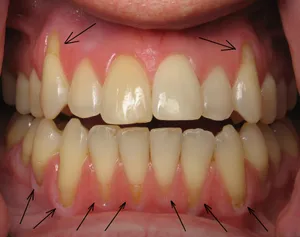
When the gum recedes upwards (gingival recession) – read more – the shape and look of the tooth change because the tooth root is exposed. Even if the shape of the tooth crown is perfect, the smile is spoiled: the exposed root surface is more yellow and gives the visual impression of a larger tooth.
In this case, the best method for restoring red aesthetics is mucosal grafting. It covers the exposed surface of the tooth root and restores the contour of the gum.
Short teeth
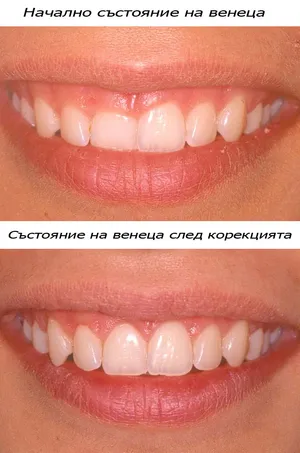
In other cases the teeth look short and unaesthetic. Sometimes this is due to tooth wear (abrasion) – read more – which is characterised by a reduction in the height of the bite. For this type of short teeth, the right treatment is to make crowns that restore both the normal size of the teeth and the height of the bite.
In other patients the teeth are short by heredity. The height of the bite is normal and the look of the teeth cannot be corrected with taller crowns, because that would raise the bite and lead to changes in chewing and discomfort. It is precisely then that the methods of red aesthetics apply.
The solution is to free up space for the required size of the crowns by partially “pulling back” the gum towards the roots of the teeth. This can be done in two main ways – by microsurgery or by laser. With both methods a certain part of the gum is cut away, and the remaining part is shaped according to the form of the necks of the teeth. In this way the teeth are lengthened without changing the height of the bite. When the correct working principles are followed, perfect red aesthetics and a completely new look of the teeth are achieved.
Grey colour of the gum
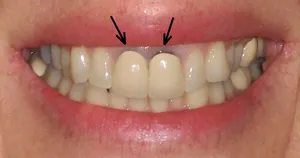
Red aesthetics also includes the colour of the gums. With metal-ceramic crowns, in some cases the gum at the crown margin takes on a grey discolouration. This requires the use of shoulder ceramic (a ceramic margin) or replacing the crown with an all-ceramic one, which restores the normal pale pink colour of healthy gums.
How much does it cost?
Treatment prices are in the price list.
Frequently asked questions
What is red aesthetics?
The colour, shape and level of the gum around the necks of the teeth. The appearance of the gum is no less important than that of the teeth themselves, and red and white aesthetics together are a condition for a beautiful smile.
How are short teeth lengthened with red aesthetics?
By microsurgery or by laser. A certain part of the gum is cut away, and the remaining part is shaped according to the form of the necks of the teeth. In this way the teeth are lengthened without changing the height of the bite.
What is done for gingival recession?
When the gum recedes, the best method for restoring red aesthetics is mucosal grafting, which covers the exposed surface of the tooth root and restores the contour of the gum.
Why does the gum sometimes turn grey?
With metal-ceramic crowns, in some cases the gum at the crown margin takes on a grey discolouration. Shoulder ceramic (a ceramic margin) has to be used, or the crown replaced with an all-ceramic one, to restore the normal pale pink colour of healthy gums.
Why are taller crowns not made for teeth that are short by heredity?
The height of the bite is normal and taller crowns would raise it, which would lead to changes in chewing and discomfort.