

Biological treatment keeps the living nerve of a tooth with deep caries by stimulating the formation of protective dentine. It uses preparations based on calcium hydroxide and is applied provided there is no spontaneous or night pain in the tooth.
What is biological treatment and why is it used?
When treating deep caries, in most cases a very thin dentine wall (thinner than 0.5 mm) remains, separating the nerve from the softened carious tissue. This wall is extremely vulnerable and is very often removed when the caries is cleaned out, exposing the nerve of the tooth.
In the past, the nerve was removed in such cases and the root canal was filled (devitalising the tooth). Given the consequences of devitalising a tooth, the method of biological treatment was developed.
Which teeth is it used for?
It is used for teeth with deep caries in which the dentine wall is very thin, and for teeth in which the nerve has been exposed.
When is it not suitable?
A mandatory condition for successful biological treatment is that there is no spontaneous or night pain in the tooth. Spontaneous pain shows that the nerve has been infected with bacteria from the saliva and pulpitis is starting to develop, which makes the method unreliable and its result unpredictable.
How is biological treatment done?
Special preparations based on the compound calcium hydroxide – Ca(OH)2 – are used for the treatment.
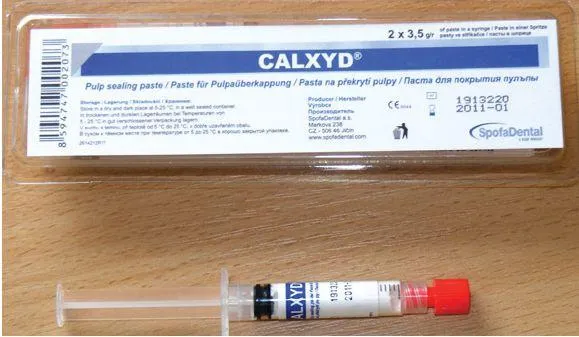
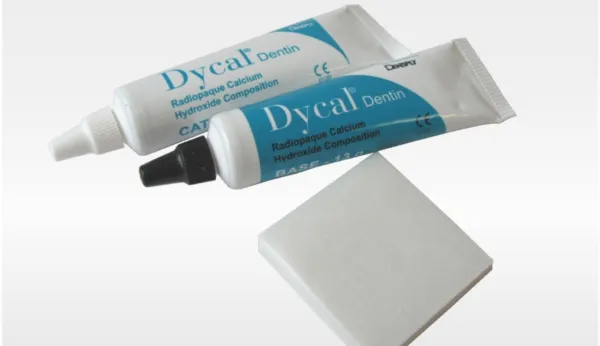
Calcium hydroxide has the unique ability to make the cells of the dental pulp produce and deposit a layer of special dentine.
When a thin dentine wall has been preserved
A small amount of Ca(OH)2 preparation is placed on the thinnest part of the dentine, followed by a base and a filling. Over time, the preparation stimulates the formation of protective dentine, and the thin dentine wall becomes thicker and effectively protects the nerve of the tooth.
When the nerve has been exposed (micro-communication)
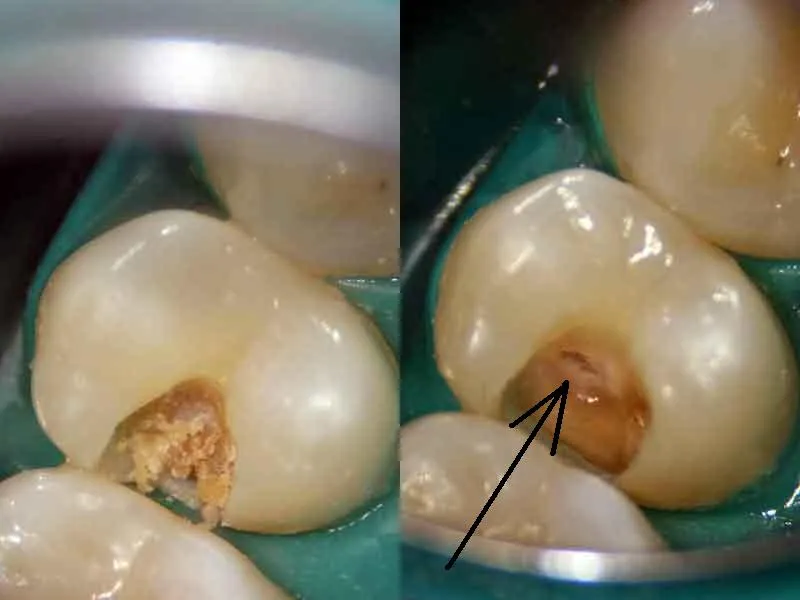
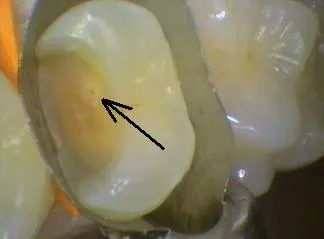
Uncleaned deep caries, cleaned caries with a large communication, and a micro-communication.
- The size of the exposure and the condition of the nerve are assessed and, if possible, the Ca(OH)2 preparation is placed directly over the micro-communication.
- The tooth is restored with a glass ionomer cement filling and the patient is placed under observation.
- At intervals set by the dentist, follow-up X-rays are taken to check whether protective dentine is forming.
- Once a sufficient layer of dentine has formed, the top layer of the glass ionomer cement filling is removed and the final photopolymer or chemopolymer filling is placed.
What happens if the tooth does not respond?
If the tooth does not respond to the biological treatment, pulpitis develops, which requires the nerve of the tooth to be removed and root canal treatment to be carried out.
How much does it cost?
Placing calcium hydroxide or MTA for biological treatment costs 20 €. All prices are in the price list.
Frequently asked questions
What is biological treatment?
A method that keeps the living nerve of a tooth with deep caries by stimulating the formation of protective dentine with preparations based on calcium hydroxide.
Which teeth is biological treatment used for?
Teeth with deep caries in which the dentine wall is very thin, and teeth in which the nerve has been exposed.
When is biological treatment not suitable?
When there is spontaneous or night pain in the tooth. It shows that the nerve has been infected with bacteria from the saliva and pulpitis is starting to develop, which makes the method unreliable and its result unpredictable.
How is the result monitored?
The tooth is restored with a glass ionomer cement filling and the patient is kept under observation – at intervals set by the dentist, follow-up X-rays are taken to check whether protective dentine is forming.
What happens if the tooth does not respond to the treatment?
Pulpitis develops, which requires the nerve of the tooth to be removed and root canal treatment to be carried out.