

Glass ionomer cement is a modern material that is entering more and more areas of dentistry. In permanent teeth it is used for temporary fillings, and in baby teeth for permanent fillings that stay until the tooth falls out.
At our clinic we do not make glass ionomer cement fillings – it is an outdated technology. We fill teeth with photopolymer (composite).
What is glass ionomer cement used for?
- Building up teeth.
- Cementing cast restorations and crowns.
- Bases under fillings in deep caries.
- Temporary fillings in permanent teeth.
- Permanent fillings in baby teeth.
What are its properties?
The specific indications for this type of cement come from its properties:
- Chemical bonding. Glass ionomer cements bond chemically to the enamel and dentine of the tooth, which gives a strong bond between the filling and the tooth.
- Fluoride. Most of them contain small amounts of fluoride, which help the remineralisation and strengthening of the remaining parts of the tooth.
- Aesthetics. The colour of the material is close to the colour of the teeth.
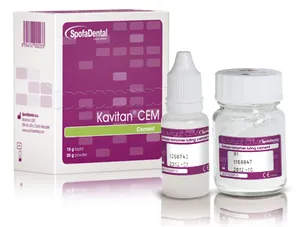
Drawbacks: it is not used for fillings that have to stay for a long period, because it is not strong enough and wears away over time under normal chewing forces. Another drawback is that it cannot be polished to a shine.
When is it used in permanent teeth?
Glass ionomer cement is used for temporary fillings meant to stay in the mouth for a longer time (in the case of biological treatment) and to restore teeth on which crowns will later be made (within a few months).
Why is it suitable for baby teeth?
Glass ionomer fillings are perfect for use in baby teeth. There they are placed and stay until the little tooth falls out, because they:
- are strong enough to withstand chewing forces until the tooth is replaced;
- are white;
- are very easy to place;
- are less sensitive to a dry tooth surface.
In children it is very hard to keep the tooth surface perfectly clean and free of saliva – which is a mandatory requirement for photopolymer and chemopolymer fillings.
Frequently asked questions
What is glass ionomer cement used for?
To build up teeth, to cement cast restorations and crowns, as a base under fillings in deep caries, for temporary fillings in permanent teeth and for permanent fillings in baby teeth.
Is it suitable for long-term fillings in permanent teeth?
No. It is not used for fillings that have to stay for a long period, because the cement is not strong enough and wears away over time under normal chewing forces.
Why are glass ionomer fillings suitable for baby teeth?
They are strong enough to withstand chewing forces until the tooth is replaced, they are white, they are very easy to place, and they are less sensitive to a dry tooth surface.
How does glass ionomer cement bond to the tooth?
It bonds chemically to the enamel and dentine, which gives a strong bond between the filling and the tooth.