
Bonding is a procedure for restoring small defects of the teeth with high-quality aesthetic photopolymer materials. It is usually done in one visit, and the result is indistinguishable from the natural part of the tooth.
What is bonding used for?
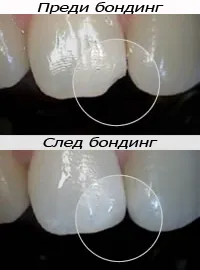
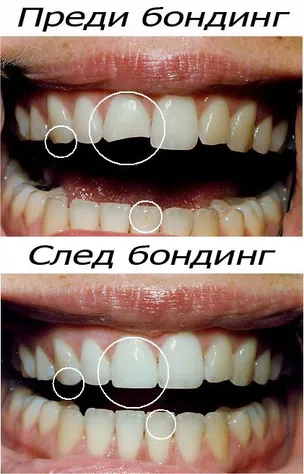
The defects that are restored may be small discoloured spots, minor chips or wear on the front teeth. Bonding can also be used to correct minor changes in the position of the teeth, but in that case the best method remains orthodontic alignment.
How does bonding go?
- The colour to be used is determined, and then the teeth are isolated from saliva with a special sheet (rubber dam).
- The isolated teeth are roughened very slightly in the places where the photopolymer will be bonded.
- They are treated with an etching gel, which provides micro-retention for the composite material.
- A layer called bond is applied, which acts as an adhesive between the tooth and the filling material (the photopolymer).
- The photopolymer is placed in small amounts, given the required shape, and the tooth is modelled according to the patient’s wishes.
- Once the desired shape, size and colour are reached, the material is polished to a shine and becomes indistinguishable from the natural part of the tooth.
What are the advantages and disadvantages?
Advantages:
- a less invasive procedure than placing veneers;
- a low price, only slightly higher than that of an ordinary photopolymer filling;
- done in one visit to the clinic, although if there are many teeth it can take several hours;
- it allows for correction and gives a very good aesthetic effect.
Disadvantages: they are mainly related to the quality of photopolymers. As materials, they are not as durable as ceramics and break more easily. Over time they may discolour to some extent and lose some of their aesthetic quality or their gloss, but this can be repaired.
Bonding is a method of aesthetic dentistry for patients who cannot afford the expensive treatment with veneers or who do not want healthy tooth tissue to be removed.
How much does it cost?
Bonding costs 80 – 200 €. All prices are in the Price list.
Frequently asked questions
What can be fixed with bonding?
Small discoloured spots, minor chips or wear on the front teeth, as well as minor changes in the position of the teeth.
How many visits does bonding take?
One. If there are many teeth, it can take several hours.
What is the difference between bonding and veneers?
Bonding is a less invasive procedure than veneers and has a lower price, but photopolymers are not as durable as ceramics and break more easily.
Can bonding discolour?
Over time the material may discolour to some extent or lose some of its gloss, but this can be repaired.